

Success in business isn’t just about having a brilliant idea it’s about possessing the right set of entrepreneurial skills to transform that idea into reality.
Entrepreneurial skills are the foundation of thriving businesses, enabling founders to solve problems efficiently, make informed decisions, and inspire teams to reach ambitious goals.
From leadership and creativity to financial literacy and resilience, these skills determine how entrepreneurs approach challenges, seize opportunities, and adapt to constant change.
Whether you’re launching your first startup or aiming to scale an existing venture, mastering these skills is crucial. In this article, you’ll discover the most essential entrepreneurial skills, why they matter, and actionable strategies to develop them.
By the end, you’ll have a clear roadmap to strengthen your abilities, overcome obstacles, and achieve long-term business success.
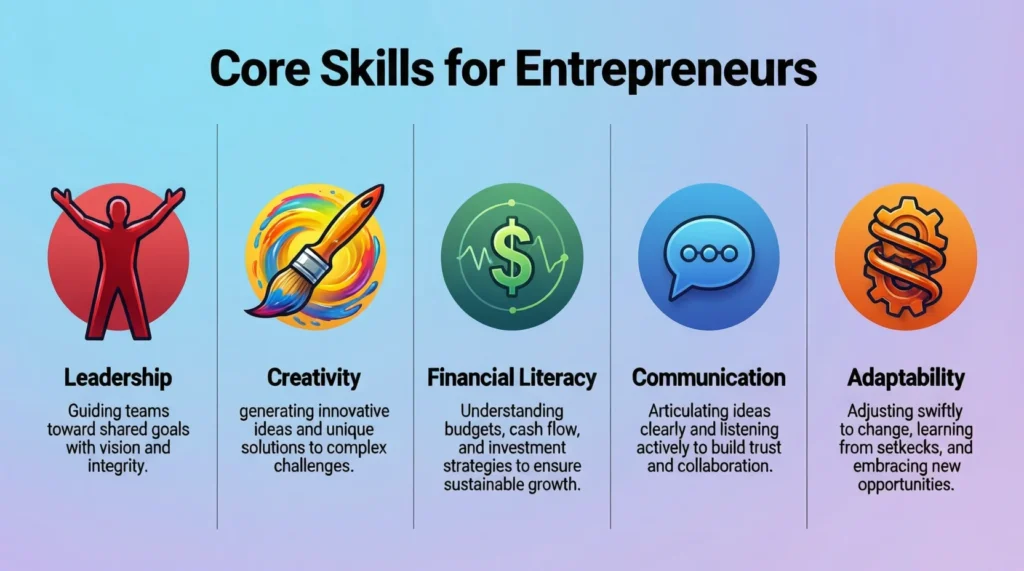
Understanding Entrepreneurial Skills
Before diving into specific skills, it’s important to understand what entrepreneurial skills actually mean. In essence, these are a mix of hard skills, like financial literacy and strategic planning, and soft skills, such as leadership and communication. Together, they allow entrepreneurs to navigate uncertainty, make critical business decisions, and create innovative solutions. Moreover, these skills aren’t innate—they can be learned, practiced, and refined over time. Understanding their significance is the first step toward becoming a more effective entrepreneur, as each skill contributes to sustainable growth, competitive advantage, and personal development.
Core Entrepreneurial Skills
Leadership and Vision
Leadership is more than directing a team—it’s about inspiring others, setting a clear direction, and turning vision into action. Entrepreneurs who excel in leadership not only motivate their teams but also cultivate a culture of accountability and innovation. For example, Steve Jobs was known for his visionary leadership, which transformed Apple into a global powerhouse. To develop leadership skills, start by taking small team-based projects, actively seek feedback, and practice decision-making under pressure.
Creativity and Innovation
Creativity and innovation are essential for identifying opportunities and solving problems in unique ways. Entrepreneurs must think beyond conventional solutions to stay competitive. Consider Airbnb founders, who turned a simple idea of renting air mattresses into a multi-billion-dollar business. To enhance creativity, engage in brainstorming sessions, explore new industries, and challenge your assumptions regularly.
Decision-Making and Risk Management
Every business involves decisions—some small, others with huge consequences. Effective entrepreneurs analyze options, weigh potential risks, and make confident choices. Risk management is closely tied to decision-making; understanding market trends, forecasting outcomes, and having contingency plans are critical. Tools like SWOT analysis or decision trees can help entrepreneurs evaluate choices systematically.
Financial Literacy
Understanding finances is crucial for sustaining a business. Financial literacy encompasses budgeting, managing cash flow, analyzing profits and losses, and understanding investments. Entrepreneurs with strong financial skills make informed decisions about growth strategies and operational costs. For instance, small business owners who track cash flow carefully are better prepared to weather economic downturns. Learning financial tools, taking courses, and regularly reviewing business statements can enhance this skill.
Networking and Relationship Building
No entrepreneur succeeds in isolation. Networking allows you to form partnerships, gain mentorship, and discover new opportunities. Building meaningful professional relationships can lead to collaborations, funding, and market insights. Attend industry events, join online communities, and connect strategically on LinkedIn to expand your network effectively.
Time Management and Productivity
Entrepreneurs juggle multiple responsibilities daily. Strong time management ensures that priorities are addressed efficiently while maintaining work-life balance. Using tools like task lists, calendars, and productivity apps can help. For instance, many successful entrepreneurs dedicate early hours to high-priority tasks while delegating routine activities to their teams.
Adaptability and Resilience
Markets, technologies, and customer needs constantly change. Entrepreneurs must adapt quickly, learn from failures, and stay motivated despite setbacks. Resilience is demonstrated by bouncing back from mistakes, embracing feedback, and persisting under pressure. Stories of companies pivoting their business models during crises highlight the importance of these skills.
Communication Skills
Communication is not just about speaking clearly; it includes persuading investors, negotiating deals, presenting ideas, and listening actively. Strong communicators can align teams, build trust, and strengthen relationships with clients and partners. Practice public speaking, storytelling, and constructive feedback to enhance communication skills.

Advanced Entrepreneurial Skills
As entrepreneurs grow, advanced skills become critical:
- Strategic Thinking: Ability to anticipate market trends, plan long-term, and make calculated decisions.
- Emotional Intelligence: Understanding and managing your emotions and others’ to build better teams.
- Negotiation and Conflict Resolution: Resolving disputes, securing favorable deals, and maintaining positive relationships.
- Scaling a Business: Managing growth sustainably through process optimization, hiring, and technology adoption.
Mastering these advanced skills positions entrepreneurs to lead organizations confidently, adapt to market changes, and expand successfully.
How to Develop Entrepreneurial Skills
Developing these skills is a continuous process:
- Self-Assessment: Identify strengths and areas for improvement using tools like skills assessments or personal reflection.
- Practical Experience: Launch small projects, take on leadership roles, or participate in internships.
- Learning Resources: Books like The Lean Startup, online courses, webinars, podcasts, and workshops provide knowledge and strategies.
- Mentorship: Seek guidance from experienced entrepreneurs to gain insights and avoid common mistakes.
- Feedback and Reflection: Regularly review decisions, learn from failures, and celebrate successes to reinforce growth.
Consistency, curiosity, and willingness to step out of your comfort zone are key to long-term skill development.
Applying Entrepreneurial Skills in Real Life
Entrepreneurial skills aren’t just theoretical—they must be applied daily:
- Use leadership and communication to guide teams and align goals.
- Apply creativity to innovate products, services, or marketing campaigns.
- Use financial literacy to track budgets, optimize costs, and forecast growth.
- Network strategically to build partnerships and secure funding.
- Practice adaptability by pivoting strategies based on customer feedback or market trends.
By integrating these skills into daily routines, entrepreneurs not only manage their businesses more effectively but also foster personal growth and long-term sustainability.

Common Mistakes to Avoid
Even skilled entrepreneurs make mistakes:
- Overestimating abilities without proper preparation.
- Ignoring team collaboration and feedback.
- Neglecting financial planning or market research.
- Failing to adapt to changing circumstances.
Avoiding these pitfalls ensures smoother operations, stronger team cohesion, and better decision-making.
FAQs
Q1: What are the top entrepreneurial skills everyone should have?
A1: Leadership, creativity, decision-making, financial literacy, networking, time management, adaptability, and communication.
Q2: Can entrepreneurial skills be learned, or are they innate?
A2: Most entrepreneurial skills can be developed through practice, education, mentorship, and real-world experience.
Q3: How long does it take to develop these skills?
A3: Skill development varies but consistent learning and practice over months or years leads to mastery.
Q4: Which skills are most critical for startup success?
A4: Leadership, decision-making, financial literacy, adaptability, and communication are particularly vital during early-stage business growth.
Final Thoughts
Entrepreneurial skills form the backbone of business success. They aren’t fixed traits but learnable abilities that grow with practice, reflection, and persistence.
By cultivating leadership, creativity, financial literacy, adaptability, and strong communication, aspiring entrepreneurs can overcome challenges, seize opportunities, and build thriving ventures.
Remember, even small daily actions like networking, reflecting on decisions, or experimenting with new ideas compound over time to create lasting impact.
Continuous learning, resilience in setbacks, and strategic planning ensure long-term success. Start today, embrace growth, and watch your entrepreneurial journey flourish.

Naz Fatima is an author at Saypadia who specializes in writing clear, relatable, and reader-friendly content about language, expressions, and modern terminology. She enjoys breaking down meanings with real-life context so readers can quickly understand and apply them. Naz’s work reflects a strong commitment to clarity, accuracy, and helping users find quick answers without confusion.