Late at night, scrolling through Instagram or TikTok, you see someone post: “TW: sad story ahead 😬”.
You pause and think, TW? Is it a typo or some new slang? If this has ever confused you, you’re not alone.
Many people search for TW meaning in text, wanting to understand its full form, social media usage, and whether it’s casual, playful, or formal.
Quick Answer:
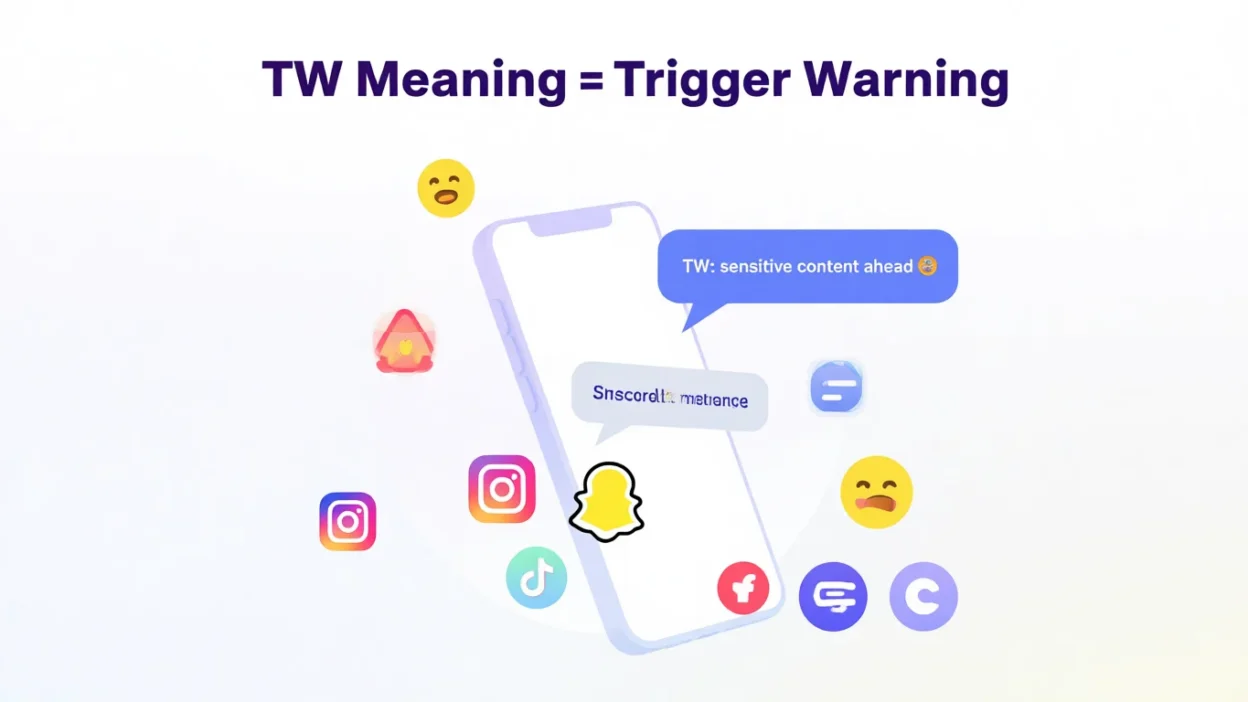
TW means “Trigger Warning.”
It’s a polite, friendly abbreviation used to warn someone that a post, message, or content might include sensitive or potentially upsetting material.
🧠 What Does TW Mean in Text?
TW = Trigger Warning

TW is primarily used to alert readers about content that could be emotionally or mentally challenging, such as mental health topics, trauma, or violence. It’s a shorthand widely used across texting, Instagram, TikTok, Snapchat, and Discord.
Example:
A friend posts: “TW: talks about anxiety and panic attacks”
In short: TW = Trigger Warning = a polite notice that content may be sensitive or upsetting.
📱 Where Is TW Commonly Used?
The TW meaning in text is most relevant on social media and casual messaging platforms:
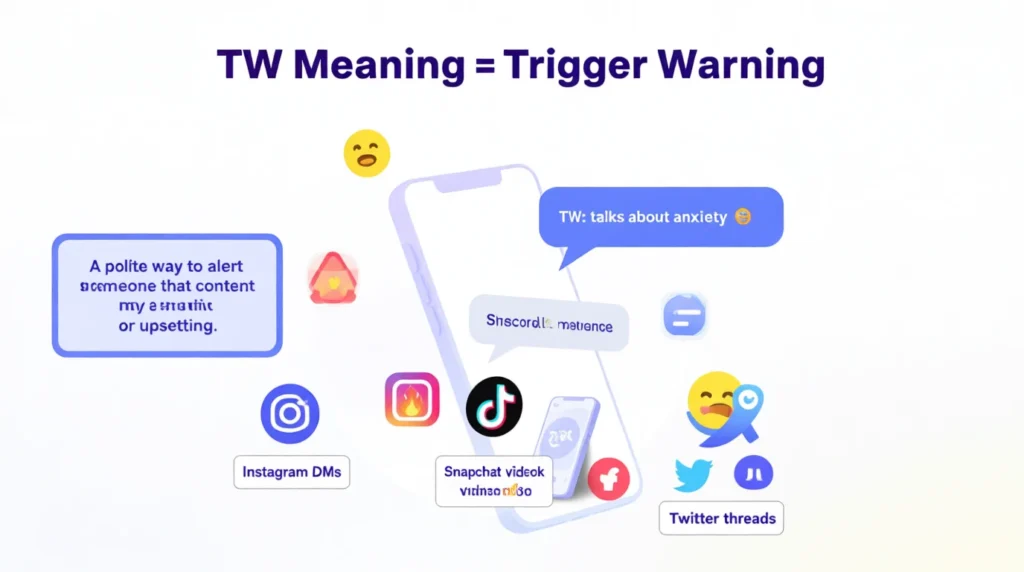
- 📸 Instagram captions & DMs — warn followers before sensitive posts
- 🔥 TikTok captions/comments — alert viewers about emotional or disturbing content
- 💬 Snapchat stories/messages — casual friend alerts
- 🎮 Discord channels — gaming or interest groups discussing mature topics
- 🐦 Twitter posts — widely used for threads with sensitive or triggering content
Platform-specific nuance:
- Instagram: Often in DMs or post captions to prevent upsetting followers
- TikTok: Used before videos discussing trauma, mental health, or graphic content
- Snapchat: Quick alerts to friends in stories or messages
- Discord: Used in gaming or interest-based communities for trigger-sensitive discussions
Tone: TW is informal yet polite, social-media-friendly, and not suitable for professional emails or workplace chats.
💬 Examples of TW in Conversation
Here are realistic examples showing TW usage in texts and social media:

A: did you see that TikTok?
B: TW: it talks about depression 😬
A: I want to post my story
B: add TW, could be sensitive to some
A: saw your story
B: TW: mentions self-harm
A: posting a thread about bullying
B: TW, people might be triggered 😅
A: sharing a scary story
B: TW: graphic content ahead 👻
- (playful/flirty)
A: can I talk about my nightmares?
B: sure, just add TW 😏
A: discussing anxiety
B: TW, sensitive content ahead
These examples demonstrate how to use TW in text, Instagram, Snapchat, TikTok, Discord, or other chats.
🕓 When to Use and When Not to Use TW
✅ When to Use TW
- Posting sensitive or graphic content on social media
- Sharing personal experiences related to mental health or trauma
- Alerting friends about potentially upsetting messages
- Including caution for violent, disturbing, or emotionally heavy content
❌ When Not to Use TW
- Casual jokes, memes, or lighthearted content
- Professional or work-related emails
- Urgent messages where a warning isn’t needed
- Everyday chat not related to sensitive topics
Comparison Table
| Context | Example Phrase | Why It Works |
|---|---|---|
| Friend Chat | “TW: talks about anxiety 😬” | Casual, polite |
| Social Media | “TW: sensitive content ahead” | Friendly warning |
| TikTok/Instagram | “TW: emotional story, watch carefully” | Platform-specific alert |
| Work Chat | “Please review the report” | Polite & professional |
| “Content may contain sensitive topics” | Formal & clear |
⚠️ Common Mistakes Using TW
| Mistake | Correct Usage | Why It Matters |
|---|---|---|
| Using TW for jokes | Don’t use TW for humorous memes | Can seem insincere |
| Overusing TW | Only add when content is sensitive | Avoids alert fatigue |
| Ignoring context | TW on non-sensitive topics | Confuses readers |
| Workplace misuse | Use formal content warning | Professional context requires clarity |
🔄 Similar Slang Words or Alternatives
| Slang | Meaning | When to Use |
|---|---|---|
| CW | Content Warning | Similar to TW, less serious |
| NSFW | Not Safe For Work | Adult or sensitive content alerts |
| PSA | Public Service Announcement | General alerts or announcements |
| FYI | For Your Information | Casual info sharing |
| BRB | Be Right Back | Short absence in chats |
| AFK | Away From Keyboard | Gaming or online chats |
👥 Who Uses TW and Why
TW is most commonly used by teens and young adults active on social media, texting, and online communities. It’s a courtesy abbreviation that prevents upsetting friends or followers, making conversations safer and more considerate.
Trend Insight 2025: TW continues to be widely used across TikTok, Instagram, Discord, Snapchat, and Twitter, especially in communities focused on mental health, personal stories, or sensitive topics.
❓ FAQs About TW
1. Is TW formal or informal?
TW is informal but polite, perfect for social media, texting, and group chats.
2. Can TW be used in professional emails?
Not typically. Use formal phrasing like: “Content may contain sensitive topics.”
3. TW vs CW — what’s the difference?
TW = Trigger Warning, usually for emotional or sensitive content. CW = Content Warning, broader and less intense.
4. Is TW only for mental health topics?
No, TW applies to any potentially upsetting content, including violence, trauma, or controversial topics.
5. How should I respond to a TW message?
Acknowledge politely: “Thanks for the warning” or “I’ll read carefully.”
6. Can TW be used in group chats?
Yes, it’s recommended for shared chats on Discord, WhatsApp, or Instagram groups.
7. Is TW still popular online?
Yes, TW remains relevant and widely used in 2025 across Instagram, TikTok, Snapchat, Discord, and Twitter.
8. Can TW be flirty or playful?
Yes! For example: “TW: nightmares incoming 😏” shows lighthearted or teasing usage.
🌟 Final Thought
TW is a friendly, simple, and considerate abbreviation that warns readers about sensitive content. Knowing TW meaning in text, its platform-specific nuances on Instagram, Snapchat, TikTok, Discord, and Twitter, and how to use it responsibly ensures you communicate thoughtfully online.
Whether sharing serious stories, playful chats, or flirty posts, TW keeps your messaging polite, safe, and relatable.

Robat Hood is a creative writer and contributor at Saypadia, focused on explaining trending words, slang, and cultural phrases in a simple and engaging way. With a sharp eye for modern language trends, Robat aims to make Saypadia a trusted place for understanding how words are used online and in daily conversations. His content is informative, approachable, and designed for readers of all levels.