You’re scrolling online and suddenly see an upside down cross maybe in a movie scene, a tattoo, a necklace, or a comment section debate. Instantly, people start arguing. Some say it’s evil.
Others say it’s religious. If you’ve ever paused and thought, wait… what does an upside down cross actually mean? you’re not alone. The symbol shows up everywhere online, and its meaning often gets mixed up. Let’s clear the confusion in a simple, calm, and honest way.
Quick Answer
An upside down cross can symbolize humility and faith (St. Peter’s Cross), but in modern pop culture it’s sometimes used as a symbol of rebellion or anti-Christian imagery.
What Does an Upside Down Cross Mean?
The meaning of an upside down cross depends entirely on context. There is no single meaning that fits every situation.
There are two main interpretations:
- Religious and historical meaning
- Modern pop culture or shock-symbol meaning
Understanding which one applies depends on who is using it and why.
Plain-English meaning:
The upside down cross is either a Christian symbol of humility or a provocative symbol used to shock, depending on context.
Example sentence:
“The upside down cross has a religious meaning that many people misunderstand.”
Bold summary:
The upside down cross is not automatically evil—its meaning changes with context.
The Original Religious Meaning (St. Peter’s Cross)
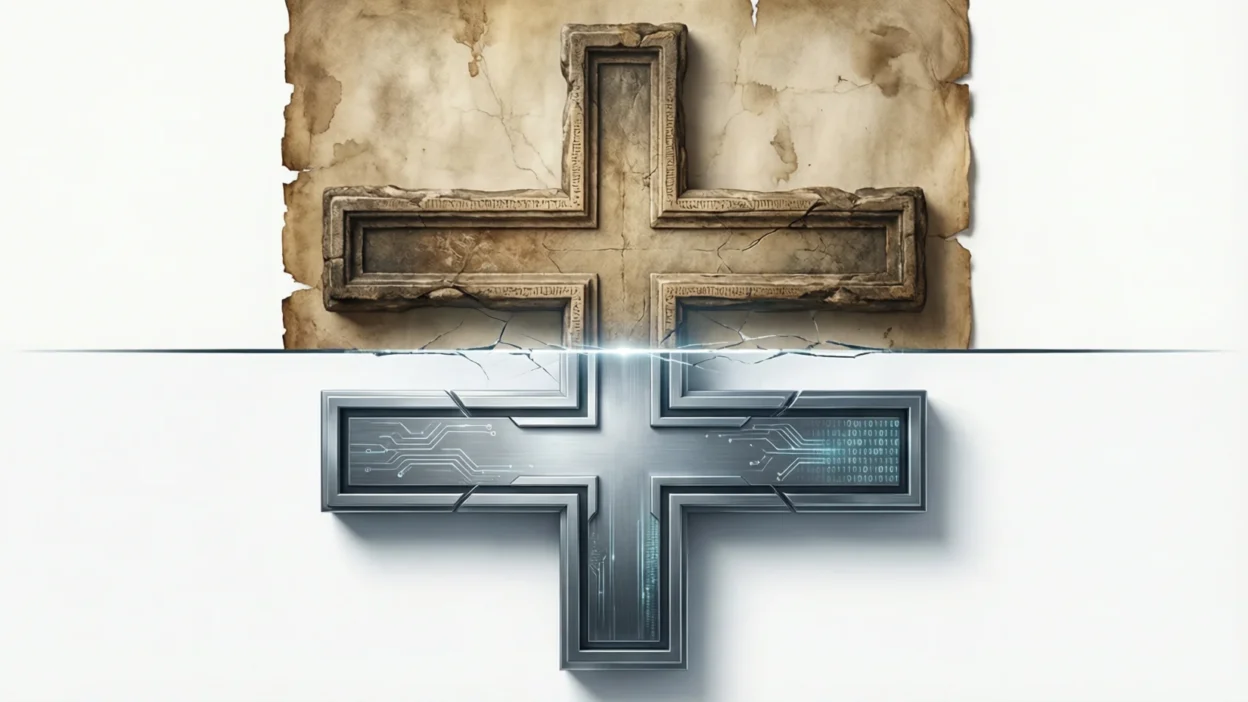
Historically, the upside down cross is known as the Cross of Saint Peter.
Why St. Peter Used an Upside Down Cross
According to Christian tradition:
- Saint Peter was sentenced to crucifixion
- He asked to be crucified upside down
- He felt unworthy to die the same way as Jesus
Because of this, the upside down cross became a symbol of:
- humility
- devotion
- unworthiness before God
In this context, the symbol is deeply Christian, not anti-Christian.
Important note:
The Vatican and Christian history recognize this symbol as religious, not satanic.
Why Do People Think the Upside Down Cross Is Evil?
In modern times, the meaning shifted due to pop culture.
Movies, music, horror themes, and shock imagery often use the upside down cross to represent:
- rebellion
- anti-religion themes
- fear or darkness
- controversy
Because of this exposure, many people now associate the symbol with evil or Satanism, even though that’s not its original meaning.
This misunderstanding spread through:
- horror movies
- metal music imagery
- edgy social media content
Upside Down Cross in Pop Culture and Online Use
Online and in entertainment, the upside down cross is often used symbolically, not religiously.
Common modern uses:
- fashion or jewelry
- tattoos
- album artwork
- movies and TV
- edgy social media posts
Tone:
Provocative, rebellious, symbolic
Not formal or religious (in most modern uses)
In these cases, it’s usually meant to challenge norms or spark reactions, not express belief.
Realistic Online Conversation Examples
(all lowercase, modern chat style)
- “isn’t the upside down cross satanic?”
- “that symbol actually has a christian meaning”
- “he’s using it just to be edgy”
- “people always misunderstand the upside down cross”
- “it depends on the context tbh”
- “that’s st peter’s cross, not evil”
- “movies really messed up its meaning”
- “symbols change meaning over time”
These examples show how confusion often comes from lack of context.
When to Use and When NOT to Use the Upside Down Cross
✅ When It Makes Sense:
- discussing religious history
- explaining Christian symbolism
- academic or educational contexts
- art with clear explanation
❌ When to Be Careful:
- public or sensitive spaces
- religious discussions without context
- workplaces or schools
- situations where it may offend
Context Comparison Table
| Context | Example Use | Why It Works / Doesn’t |
|---|---|---|
| history class | st. peter’s cross | educational |
| movie poster | horror symbolism | artistic |
| casual post | unexplained symbol | confusing |
| religious space | upside down cross | may offend |
Is the Upside Down Cross Satanic?
This is the most common question—and the answer is not inherently.
- Historically: No, it is Christian
- Modern misuse: Sometimes portrayed as anti-Christian
Satanism does not officially claim the upside down cross as a core symbol. The confusion comes from media portrayal, not theology.
Key takeaway:
Intent and context matter more than the symbol itself.
Similar Symbols and Their Meanings
| Symbol | Meaning | Context |
|---|---|---|
| regular cross | christian faith | religious |
| inverted pentagram | often satanic | occult |
| ankhs | life, egyptian | spiritual |
| broken cross | rebellion | modern art |
| st. peter’s cross | humility | christian |
Mixing symbols without understanding can lead to misunderstandings.
FAQs About the Upside Down Cross
What does an upside down cross symbolize?
It symbolizes humility in Christianity or rebellion in pop culture.
Is an upside down cross evil?
No. It’s not inherently evil.
Why do movies use it as a scary symbol?
To shock viewers and challenge religious norms.
Is the upside down cross anti-Christian?
Historically, no. In pop culture, sometimes yes.
Can Christians use the upside down cross?
Yes, when referencing St. Peter’s story.
Why is the meaning confusing?
Because modern media changed how people perceive it.
Final Thought
The upside down cross is one of the most misunderstood symbols online. Its original meaning is rooted in faith, humility, and history, not evil.
At the same time, modern culture has reshaped it into a symbol of rebellion or shock. Understanding both sides helps you avoid jumping to conclusions. Like many symbols, meaning comes from context not assumptions.

Hadi Bhatti is a passionate writer and content creator at Saypadia, known for turning complex words, phrases, and internet slang into simple, easy-to-understand explanations. With a strong interest in language, meanings, and digital communication, Hadi focuses on helping readers understand what words really mean in everyday use. His writing style is clear, engaging, and user-focused, making learning both practical and enjoyable.