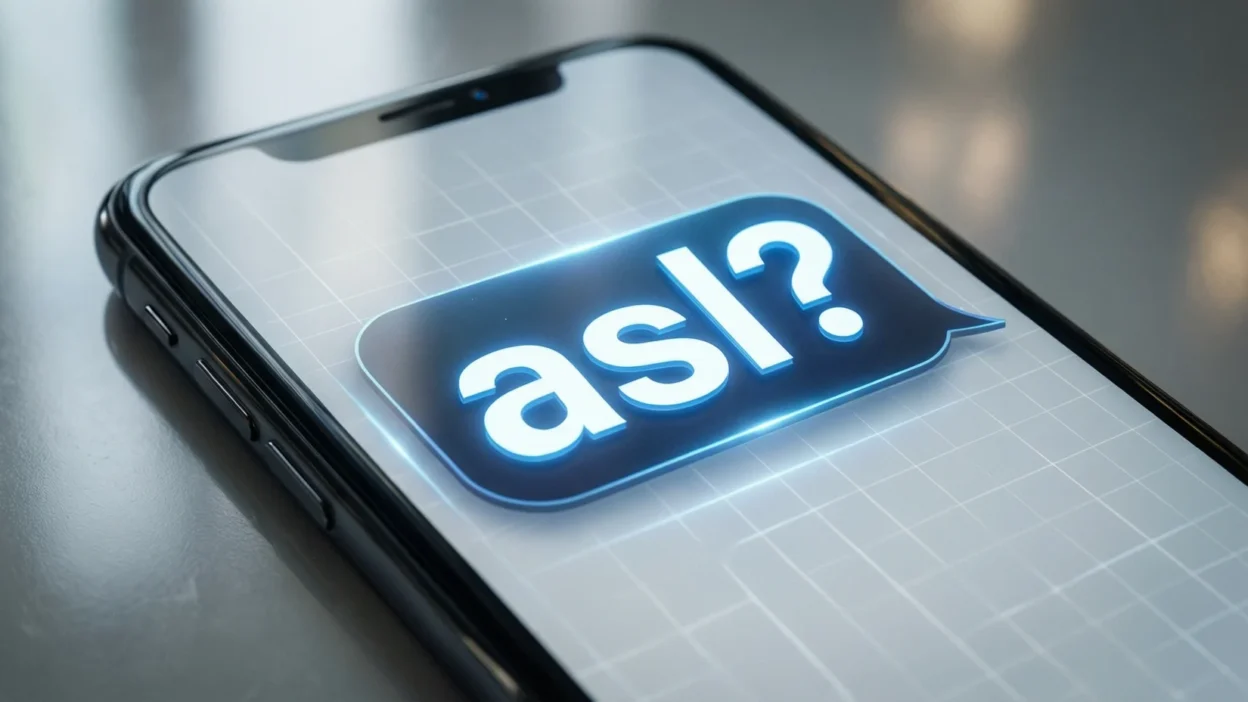
You’re chatting with someone online, maybe in a comment section, game chat, or DM, when they suddenly reply with “asl?”. You pause for a second. Are they asking a question? Is it slang? Is it something serious or just casual internet talk? If you’ve ever seen ASL pop up in texts or online conversations and felt confused, you’re not alone. This term has been around for years, but it still catches people off guard, especially newer internet users. Let’s break it down clearly, without confusion, so you know exactly what it means and how it’s used today.
Quick Answer:
ASL in text stands for “Age, Sex, Location,” used to ask basic personal info in casual online chats.
What Does ASL Mean in Text and Online Chat?
ASL is an internet slang abbreviation that stands for:
- A = Age
- S = Sex (or gender)
- L = Location
Plain-English Explanation
When someone types “asl?”, they’re asking for basic details about you. It’s usually meant to quickly understand who they’re talking to, especially in casual or anonymous online spaces.
Example Sentence:
“hey, asl?”
Bold Summary: ASL means “Age, Sex, Location” and is used to ask basic personal details in informal online chats.
Why Do People Use ASL?
People use ASL because:
- It’s fast and simple
- Helps understand who they’re chatting with
- Common in anonymous or casual spaces
- Saves typing time
It became popular in early internet chat rooms and still appears today, especially in DMs and gaming chats.

Where Is ASL Commonly Used?
ASL is not used everywhere. It fits specific online spaces.
Common Places You’ll See ASL
- Private DMs
- Chat rooms
- Gaming chats
- Anonymous apps or forums
- Social media comments (rare but possible)
Tone and Style
- Very casual
- Informal
- Sometimes intrusive
- Can feel outdated
Important: ASL is not appropriate in professional or public conversations.
Realistic Conversation Examples Using ASL
Here’s how ASL shows up in real texting culture:
- “hey asl?”
- “asl before we keep chatting?”
- “lol asl?”
- “asl? just curious”
- “someone just asked me asl 😅”
- “he opened with asl”
- “why do people still say asl”
These examples reflect how ASL feels casual and sometimes awkward.
When to Use and When Not to Use ASL
✅ When ASL Is Okay to Use
- Casual, anonymous chats
- Gaming or chat rooms
- Mutual conversations where info is expected
❌ When You Should Not Use ASL
- First message to strangers on social media
- Professional conversations
- Public comment sections
- When privacy matters
Context Comparison Table
| Context | Example Phrase | Why It Works or Doesn’t |
|---|---|---|
| chat room | “asl?” | normal for the space |
| gaming chat | “asl bro?” | casual tone |
| instagram dm | “asl” | feels intrusive |
| work chat | “asl?” | inappropriate |
ASL vs Similar Slang or Alternatives
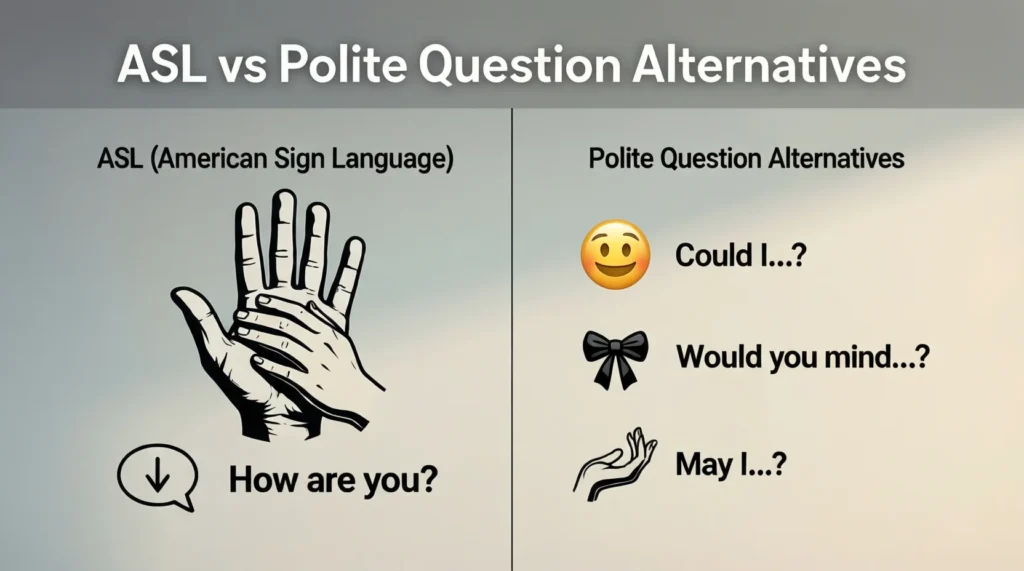
Instead of using ASL, many people now prefer clearer, friendlier phrases.
| Alternative | Meaning | When to Use |
|---|---|---|
| “how old are you?” | age question | casual chats |
| “where are you from?” | location | friendly convos |
| “tell me about yourself” | general info | safer option |
| “m or f?” | gender | very informal |
| “any chance you’re local?” | location | polite tone |
ASL can feel blunt, so alternatives often work better.
Is ASL Still Used in 2026?
Yes, but less than before. ASL is now:
- Seen as old-school internet slang
- Often joked about or mocked
- Still used in anonymous spaces
Many people prefer respectful, full questions instead.
FAQs About “What Does ASL Mean in Text?”
1. Is ASL safe to answer?
Only if you’re comfortable sharing personal info.
2. Is ASL rude?
It can feel rude or invasive, depending on context.
3. Do kids still use ASL?
Less often. It’s more common among older internet users.
4. Can ASL mean something else?
In texting, it almost always means Age, Sex, Location.
5. Is ASL used on Snapchat or Instagram?
Rarely, and often seen as awkward.
6. Should I reply to ASL?
Only if you trust the person and feel safe.
7. Is ASL formal slang?
No. It’s strictly informal.
Final Thought
So, what does ASL mean in text? It stands for Age, Sex, Location, a quick way to ask personal details in casual online chats. While it was extremely popular in early internet culture, today it can feel outdated or intrusive.
Understanding what ASL means helps you decide when to respond, when to ignore it, and how to protect your privacy in modern texting culture.

Robat Hood is a creative writer and contributor at Saypadia, focused on explaining trending words, slang, and cultural phrases in a simple and engaging way. With a sharp eye for modern language trends, Robat aims to make Saypadia a trusted place for understanding how words are used online and in daily conversations. His content is informative, approachable, and designed for readers of all levels.