
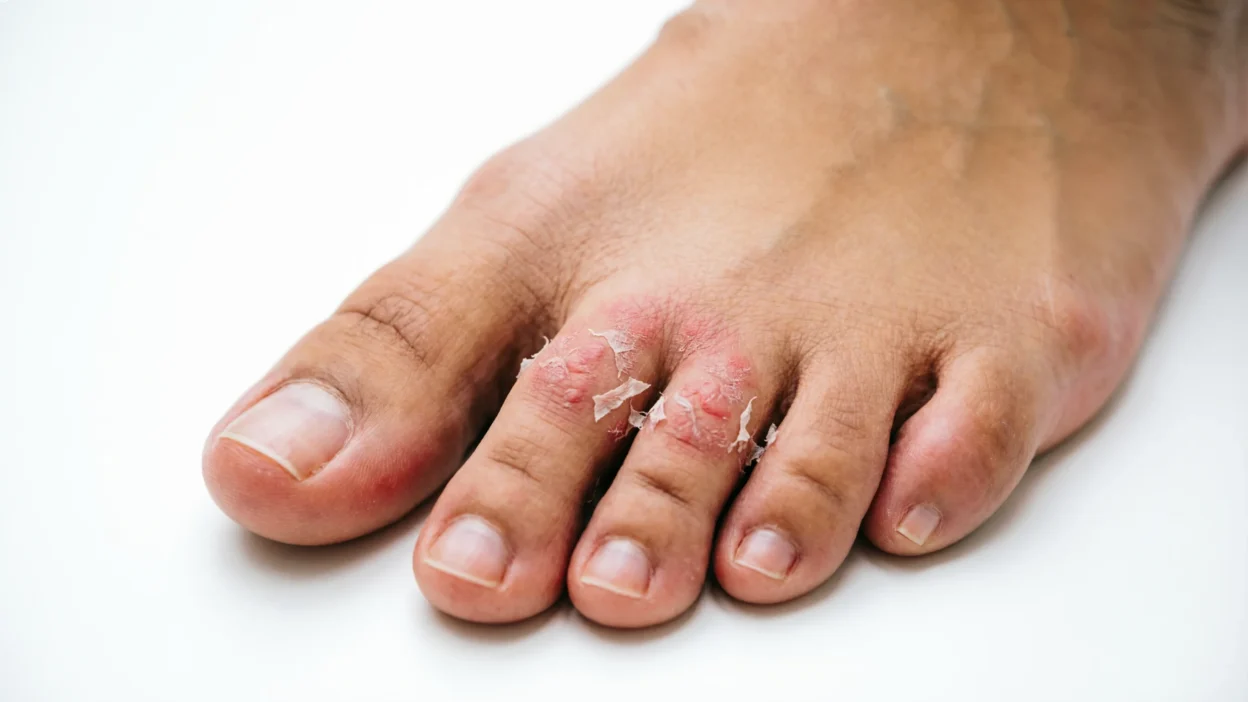
The first time I noticed itchy skin between my toes, I thought it was just dryness. But then the itching got worse. The skin started peeling. It even looked a little white and cracked. That’s when I started wondering, what does athlete’s foot look like?
If you’ve seen something similar on your feet and feel unsure, you’re not alone. Athlete’s foot is common and easy to mistake for dry skin. Let’s walk through what it really looks like and how to recognize it early.
Quick Answer
Athlete’s foot usually looks like red, itchy, peeling, or cracked skin, most often between the toes.
What Is Athlete’s Foot?
Athlete’s foot is a common fungal infection of the skin. The medical name is Tinea pedis.
It happens when fungus grows on the skin of your feet. Fungus loves warm, damp places. That’s why it often starts between your toes.
What Does Athlete’s Foot Look Like?
The appearance can vary, but here are the most common signs.
1. Peeling or Flaking Skin
The skin may:
- Peel
- Flake
- Look dry and powdery
It often starts between the fourth and fifth toes.
2. Red or Pink Rash
You may notice:
- Red patches
- Slight swelling
- Irritated-looking skin
The rash can spread to the bottom of the foot.
3. Cracked Skin
In more serious cases:
- The skin cracks
- It may feel painful
- It can sometimes bleed
Cracks increase the risk of bacterial infection.
4. White, Soggy Skin Between Toes
Sometimes the skin looks:
- Soft
- White
- Moist or soggy
This happens because fungus thrives in damp areas.
5. Itching and Burning
The itching can be strong, especially after:
- Removing shoes
- Sweating
- Showering
Burning or stinging may also happen.
6. Blisters (Less Common)
In some cases, small blisters can appear on:
- The sides of the feet
- The soles
These may break open and feel sore.
Different Types of Athlete’s Foot
Athlete’s foot does not always look the same. There are three main patterns:
1. Interdigital Type
This is the most common.
It affects the skin between the toes.
2. Moccasin Type
This affects the bottom and sides of the foot.
It may look like dry, thick, scaly skin.
3. Vesicular Type
This includes fluid-filled blisters.
It’s less common but more uncomfortable.
How Is It Different From Dry Skin?
Dry skin:
- Usually isn’t very itchy
- Doesn’t cause strong burning
- Improves quickly with moisturizer
Athlete’s foot:
- Itches a lot
- Can sting or burn
- Does not go away with lotion alone
If lotion doesn’t help and itching continues, it may be a fungal infection.
Who Gets Athlete’s Foot?
Anyone can get it, not just athletes.
It’s more common if you:
- Wear tight shoes
- Sweat a lot
- Walk barefoot in locker rooms
- Use public showers
- Share towels
Fungus spreads easily in moist public areas.
When to See a Doctor
You should seek medical advice if:
- The rash doesn’t improve after treatment
- It spreads
- There is pus or severe pain
- You have diabetes and notice foot changes
Early treatment prevents complications.
Frequently Asked Questions
1. Can athlete’s foot spread to other body parts?
Yes. If you touch the infected area and then another part of your body, the fungus can spread.
2. Is athlete’s foot contagious?
Yes. It spreads through direct contact or shared surfaces like floors and towels.
3. Does athlete’s foot smell?
Sometimes. A strong odor can happen if bacteria grow along with fungus.
4. Can it go away on its own?
Mild cases might improve, but most need antifungal treatment.
5. How long does it last?
With proper treatment, it often clears in 1–4 weeks.
Final Thought
So, what does athlete’s foot look like? It usually appears as red, itchy, peeling, or cracked skin between the toes. In some cases, it may look white and soggy or even form blisters.
It’s common, treatable, and easier to manage when caught early. If you notice persistent itching or peeling that does not improve with regular lotion, it may be time to consider antifungal treatment or speak with a healthcare professional.

Naz Fatima is an author at Saypadia who specializes in writing clear, relatable, and reader-friendly content about language, expressions, and modern terminology. She enjoys breaking down meanings with real-life context so readers can quickly understand and apply them. Naz’s work reflects a strong commitment to clarity, accuracy, and helping users find quick answers without confusion.