
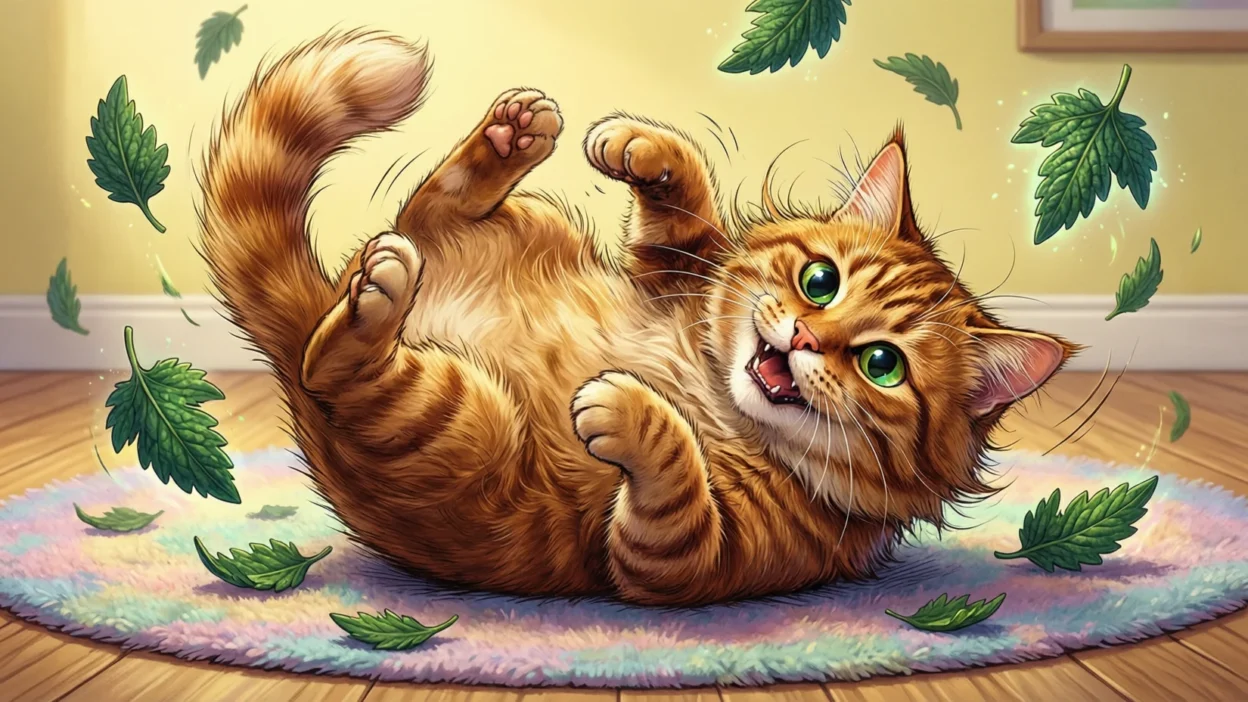
The first time you see it, it’s honestly confusing. You sprinkle a little green herb on the floor, and suddenly your calm cat is rolling, rubbing, zooming, and acting like they just won the lottery. Some cats go wild. Others sniff once and walk away like nothing happened.
If you’ve ever laughed, worried, or just stared in disbelief and thought what does catnip do to cats, you’re not alone. Let’s explain exactly what’s going on in a clear, friendly, and no-stress way.
Quick Answer:
Catnip makes many cats feel temporarily excited, playful, relaxed, or euphoric by triggering scent receptors in their brain.
What Is Catnip? (Simple Explanation)
Catnip is a natural herb from the mint family. Its scientific name is Nepeta cataria.
Why It Affects Cats
Catnip contains a compound called nepetalactone. When cats smell it, this compound interacts with receptors in their nose that send signals to the brain.
Important detail:
👉 Cats don’t get “high” like humans.
👉 The reaction is instinctive, not harmful.
Bold Summary: Catnip is a natural plant that triggers a playful or calming response in many cats.
What Does Catnip Do to Cats Exactly?
The effects depend on the cat, but most reactions fall into a few clear patterns.
Common Catnip Behaviors
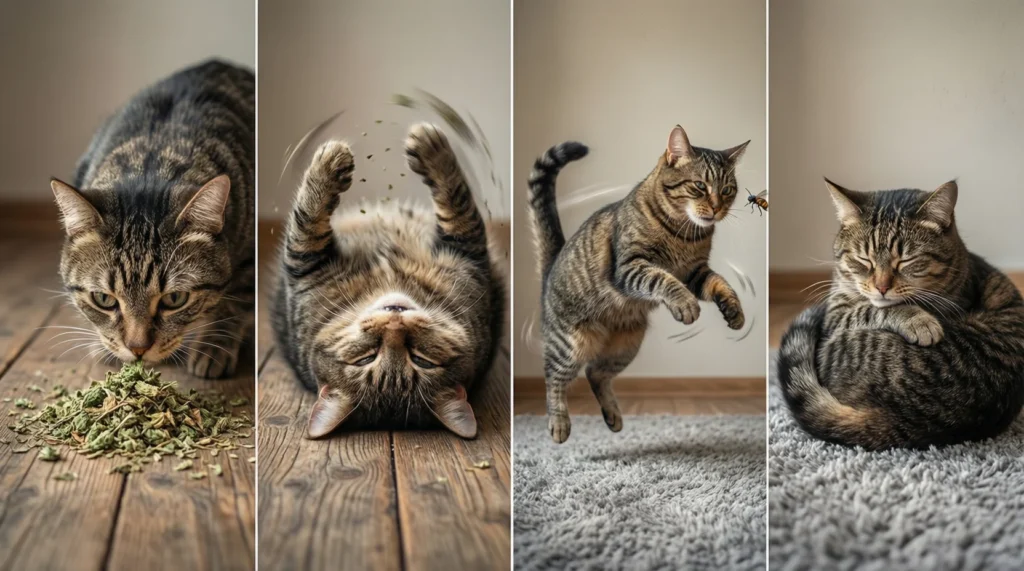
After smelling catnip, cats may:
- Roll on the floor
- Rub their face or body
- Meow, purr, or chirp
- Zoom around suddenly
- Act playful or silly
- Appear calm or sleepy afterward
These reactions usually start within seconds.
Example Observation:
“my cat sniffed catnip and instantly started rolling like it was the best day ever.”
Bold Summary: Catnip causes short bursts of excitement or relaxation, not aggression or harm.
How Long Do Catnip Effects Last?
This part surprises many people.
Timeline of Effects
- Reaction starts: 5–30 seconds
- Active phase: 5–15 minutes
- Cool-down period: up to 1–2 hours
After that, cats become temporarily immune to catnip until their brain “resets.”
So if your cat ignores catnip later, that’s normal.

Why Do Some Cats go out of control and Others Don’t?
Not all cats react to catnip.
The Genetics Behind It
- Sensitivity to catnip is genetic
- About 50–70% of cats respond
- Kittens under 3–6 months usually don’t react
- Some adult cats never respond at all
If your cat ignores catnip, nothing is wrong.
Does Catnip Make Cats Aggressive?
Short answer: No, not usually.
Typical Emotional Effects
- Excitement
- Playfulness
- Relaxation
- Mild silliness
Very rarely, a cat may become overstimulated, which can look like swatting or biting. This usually means it’s time to give them space.
What Happens If a Cat Eats Catnip?
Smelling and eating catnip cause different effects.
Smelling Catnip
- Energetic
- Playful
- Active behaviors
Eating Catnip
- More calming
- Relaxed
- Sometimes sleepy
Both are safe in small amounts.

Is Catnip Safe for Cats?
Yes, catnip is considered very safe.
Safety Facts
- Non-addictive
- Non-toxic
- No long-term side effects
- Safe for occasional use
The main risk is overuse, which can reduce its effect or cause mild stomach upset if eaten in large amounts.
How Often Should You Give Catnip?
Moderation is key.
Recommended Use
- 1–2 times per week
- Small amounts
- As a treat or enrichment tool
Using it too often can make it less exciting.
Different Forms of Catnip
Catnip comes in more than one form.
Common Types
- Dried leaves
- Catnip spray
- Catnip-infused toys
- Fresh catnip plants
Some cats prefer one form over another.
When to Use Catnip (and When Not To)
✅ When Catnip Is Helpful
- Encouraging play
- Reducing boredom
- Introducing new toys
- Helping shy cats relax
❌ When to Avoid Catnip
- If your cat becomes overstimulated
- Right before vet visits
- If your cat shows stress signs
- Multiple times daily
Context Comparison Table
| Situation | Use Catnip? | Why |
|---|---|---|
| playtime | yes | boosts activity |
| training | sometimes | positive reinforcement |
| vet visit | no | may increase stress |
| daily routine | limit | avoids desensitization |
Does Catnip Affect Big Cats Too?
Yes—interestingly, it does.
Wild Cats and Catnip
- Lions
- Tigers
- Leopards
Many big cats react similarly, showing playful behavior.
Myths About Catnip (Cleared Up)
Let’s clear a few common misunderstandings.
- ❌ Catnip is not a drug
- ❌ It does not harm the brain
- ❌ Cats don’t overdose on small amounts
- ❌ It doesn’t change personality permanently
It’s simply a natural stimulant.
FAQs About “What Does Catnip Do to Cats?”
1. Can cats become addicted to catnip?
No. Catnip is not addictive.
2. Why does my cat roll so much on catnip?
Rubbing spreads scent and feels stimulating.
3. Is catnip bad for kittens?
Kittens usually don’t react, but it’s safe.
4. Can dogs have catnip?
Yes, but it makes dogs calm instead of excited.
5. Why did my cat stop reacting to catnip?
Temporary immunity or overuse is common.
6. Does catnip expire?
Yes. Old catnip loses potency.
7. Is catnip okay for indoor cats?
Yes. It’s great enrichment for indoor cats.
Final Thought
So, what does catnip do to cats? It triggers a natural, short lived response that can make cats playful, relaxed, or delightfully weird.
Not every cat reacts the same, and that’s perfectly normal. Used in moderation, catnip is a safe, fun way to enrich your cat’s life and add a little joy to their routine both for them and for you watching.

Hadi Bhatti is a passionate writer and content creator at Saypadia, known for turning complex words, phrases, and internet slang into simple, easy-to-understand explanations. With a strong interest in language, meanings, and digital communication, Hadi focuses on helping readers understand what words really mean in everyday use. His writing style is clear, engaging, and user-focused, making learning both practical and enjoyable.