You’re reading the news or scrolling social media, and suddenly you see the word “censure.” It sounds serious. Maybe political. Maybe disciplinary. You pause and think, Is this a punishment? A warning? Or just strong words? You’re not alone—censure is one of those words people hear often but don’t fully understand.
Quick Answer: What does censure mean?
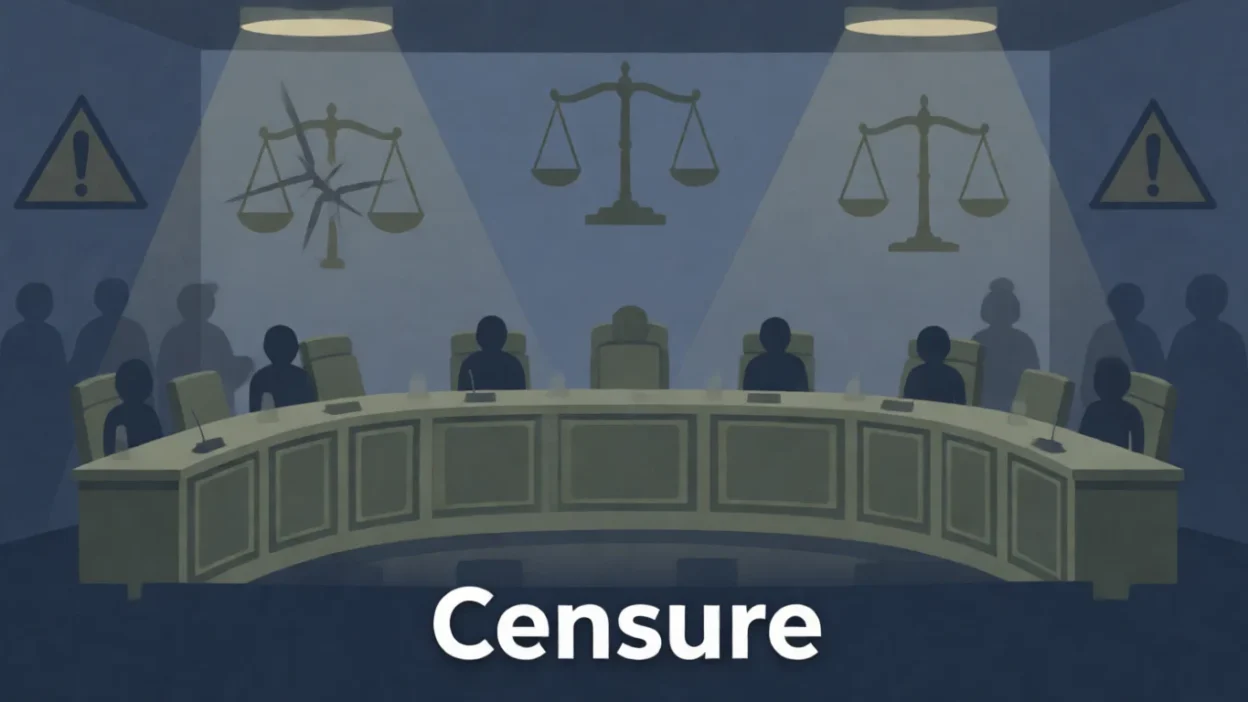
Censure means “strong public criticism or official disapproval.” It’s a formal and serious way of saying someone is being officially called out for bad behavior.
Let’s break it down in a clear, simple way.
What Does Censure Mean?
Censure means to officially criticize or strongly disapprove of someone’s actions, usually in public or by an authority.
It does not usually mean jail or fines. Instead, it’s more like a formal warning or public scolding.
Simplified meaning
- Censure = strong disapproval
- Often done by an official group
- Used when someone breaks rules or standards
Short example
“the committee voted to censure the member”
Bold summary
In short: censure = official criticism = public disapproval.
Where Is Censure Commonly Used?
You’ll mostly see censure in serious or formal settings.
Common places include 👇
- 🏛️ Politics – government officials
- 🏫 Schools – boards or councils
- 🏢 Workplaces – professional conduct
- 📰 News articles – public accountability
- ⚖️ Organizations – rule enforcement
Tone check
- ❌ Casual
- ❌ Friendly
- ✅ Formal
- ✅ Serious
- ✅ Official
Censure is not slang. It’s a strong word with weight.
Examples of Censure in Conversation
Here are real-life style examples to show how censure is used.
- “the senator faced censure for his comments”
- “the board issued a formal censure”
- “she was publicly censured by the committee”
- “the school voted to censure the teacher”
- “censure followed the policy violation”
- “the organization announced a censure today”
Notice the serious tone in each example.
When to Use and When Not to Use Censure
This word works best in the right context.
✅ When to Use Censure
- Talking about rules or discipline
- News or official reports
- Formal writing
- Public accountability situations
❌ When Not to Use Censure
- Casual chats
- Jokes or memes
- Friendly conversations
- Everyday texting
Context comparison table
| Context | Example Phrase | Why It Works |
|---|---|---|
| Politics | “the official received censure” | formal |
| Workplace | “the board voted to censure” | official |
| News report | “public censure followed” | accurate |
| Friend chat | ❌ “i censured him lol” | too serious |
| Casual text | ❌ “censure this” | unnatural |
Similar Words or Alternatives
Here are words that are similar to censure, depending on tone.
| Word | Meaning | When to Use |
|---|---|---|
| criticize | point out faults | general |
| condemn | strongly disapprove | serious |
| reprimand | official warning | workplace |
| scold | express disapproval | informal |
| rebuke | sharp criticism | formal |
Choose based on how serious the situation is.
Censure vs Punishment (Quick Clarification)
A common confusion is thinking censure = punishment.
Here’s the truth:
- Censure = public criticism
- It may hurt reputation
- It usually does not include fines or jail
Think of it as a formal warning with public notice.
FAQs About Censure Meaning
1. What does censure mean?
It means strong official disapproval or criticism.
2. Is censure a punishment?
Not usually. It’s more of a formal warning.
3. Is censure used in politics?
Yes. Very commonly.
4. Is censure negative?
Yes. It shows disapproval.
5. Can a person recover after censure?
Yes. It affects reputation, not freedom.
6. Is censure the same as censor?
No. Censor means to block or remove content.
7. Is censure formal language?
Yes. It’s formal and official.
Final Thoughts
Now you know what does censure mean. It’s a serious word used to show official disapproval, not casual criticism. You’ll mostly see it in politics, news, and formal settings. When you hear it, think public criticism, not punishment.
Understanding words like censure helps you read news and discussions with confidence.

Robat Hood is a creative writer and contributor at Saypadia, focused on explaining trending words, slang, and cultural phrases in a simple and engaging way. With a sharp eye for modern language trends, Robat aims to make Saypadia a trusted place for understanding how words are used online and in daily conversations. His content is informative, approachable, and designed for readers of all levels.