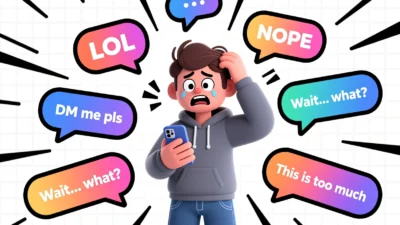
You’re scrolling through comments and someone says, “that take is so chronically online.”
It sounds sharp, maybe funny, maybe rude. If you’ve ever wondered what people mean by it or worried it might describe you you’re not alone. This phrase popped up fast and stuck around because it hits close to home.
Quick Answer:
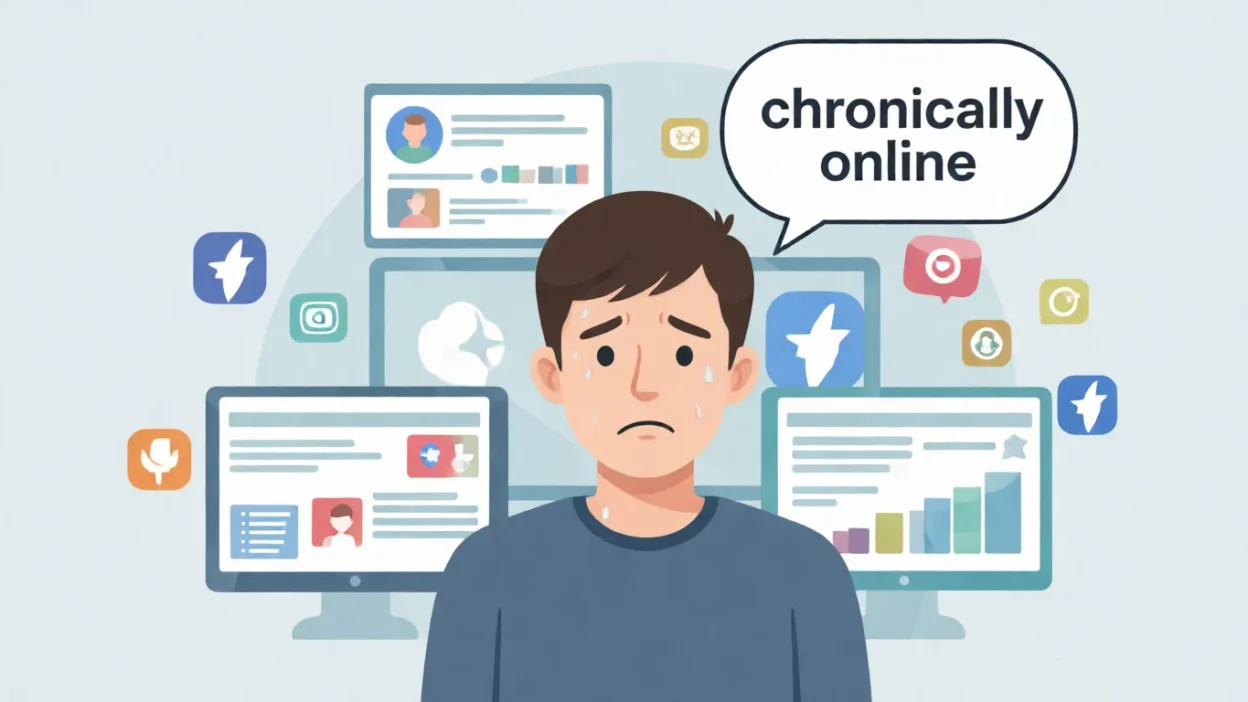
Chronically online means spending so much time on the internet that it starts shaping your views, behavior, or reactions more than real life. It’s usually a critical or joking way to say someone is out of touch with offline reality.
Let’s explain it clearly and simply.
What Does Chronically Online Mean in Text?
This phrase describes a pattern, not a single moment. It points to people who live deeply in internet spaces—trends, drama, memes—and react as if those spaces are the whole world.
Simplified meaning
- Always online
- Heavily influenced by internet culture
- Reacts using meme logic
- Misses real-world context
Short example
“only someone chronically online would argue about that”
In short:
chronically online = too influenced by the internet = out of touch with real life.
It’s more about mindset than screen time alone.
Where Is “Chronically Online” Commonly Used?
You’ll see this phrase across social platforms 👇
- 🐦 Twitter / X – hot takes and debates
- 🎵 TikTok – commentary videos
- 📸 Instagram – meme pages
- 💬 Group chats – roasting friends
- 🧵 Online forums – culture talk
Tone check
- ⚠️ Often critical
- ⚠️ Sometimes sarcastic
- ✅ Casual
- ❌ Not professional
It’s part of modern social media slang and online culture.
Examples of “Chronically Online” in Conversation
Here are realistic chat-style examples in lowercase.
- “this argument feels chronically online”
- “no one irl cares about that, it’s chronically online”
- “that reaction is very chronically online behavior”
- “touch grass fr”
- “log off for a bit”
- “internet brain moment”
It’s often paired with jokes about needing a break from screens.
When to Use and When Not to Use “Chronically Online”
Context matters because this phrase can sting.
✅ When to Use It
- Discussing internet culture
- Light roasting among friends
- Commenting on online-only drama
- Meme or commentary spaces
❌ When Not to Use It
- Serious mental health talks
- Professional conversations
- Direct personal attacks
- Sensitive situations
Context comparison table
| Context | Example Phrase | Why It Works |
|---|---|---|
| Meme comment | “very chronically online take” | fits tone |
| Friend chat | “you’re too online rn” | playful |
| Cultural debate | “this is internet logic” | descriptive |
| Work meeting | ❌ using it | inappropriate |
| Personal issue | ❌ label | dismissive |
Similar Slang Words or Alternatives
If you want softer or clearer options, try these.
| Term | Meaning | When to Use |
|---|---|---|
| too online | overexposed to internet | casual |
| terminally online | extreme version | memes |
| touch grass | get offline | joking |
| internet-brained | meme thinking | commentary |
| out of touch | disconnected | neutral |
Each has a slightly different tone and intensity.
FAQs About “Chronically Online”
1. Is it an insult?
Usually yes, but often joking or sarcastic.
2. Does it mean addicted to the internet?
Not exactly. It’s more about mindset than addiction.
3. Is it always negative?
Mostly, though sometimes playful.
4. Can anyone be chronically online?
Yes—especially during heavy social media use.
5. Is it common slang?
Very common in recent years.
6. Should I call someone this directly?
Only if you know they’ll take it lightly.
7. Does it relate to mental health?
Sometimes, but it’s usually cultural commentary, not a diagnosis.
Final Thoughts
Now you know what chronically online means and why it shows up so often in comments.
It’s a way people point out when internet culture starts replacing real-world perspective. Sometimes it’s funny. Sometimes it’s harsh.
Either way, it’s a reminder that logging off once in a while isn’t a bad idea.

Hadi Bhatti is a passionate writer and content creator at Saypadia, known for turning complex words, phrases, and internet slang into simple, easy-to-understand explanations. With a strong interest in language, meanings, and digital communication, Hadi focuses on helping readers understand what words really mean in everyday use. His writing style is clear, engaging, and user-focused, making learning both practical and enjoyable.