
If you’ve ever been scrolling through texts, real-estate listings, HR emails, or even online forums and suddenly saw the word “contingent,” you’re not alone.
The first time I saw it, a friend messaged me saying, “My offer is contingent rn 😭” and I sat there pretending I understood. Spoiler: I didn’t. It sounded serious, complicated, and definitely not slang I was used to.
But once you learn what it actually means, everything becomes way clearer — and you’ll start seeing it everywhere.
Quick Answer:
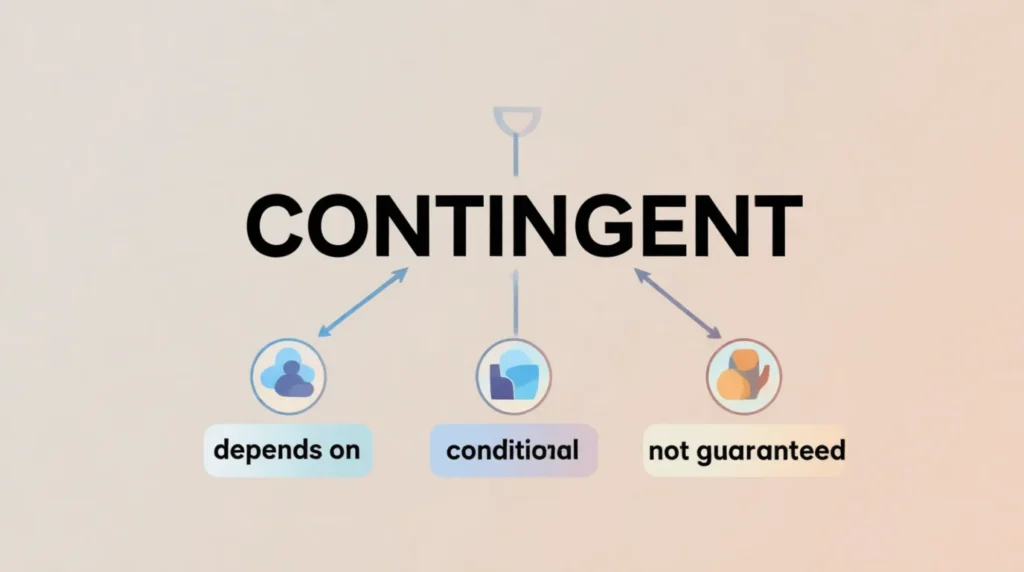
Contingent means “dependent on something else happening.” It’s a formal, factual, and conditional way of saying “this will only happen if a certain requirement is met.”
🧠 What Does Contingent Mean in Text?
In texting or everyday conversation, contingent is used to say that something depends on a specific condition or outcome. It’s not casual slang — it’s more of a real word people use when discussing plans, approvals, deals, or situations that aren’t confirmed yet.
Simple example:
“Yeah, I might come to the trip, but it’s contingent on my work schedule.”
This means the person will come only if their work schedule allows it.
In short:
Contingent = Dependent on a condition = Not confirmed until something else happens.
📱 Where Is Contingent Commonly Used?
You’ll see “contingent” used in many different places, but it’s most common in:
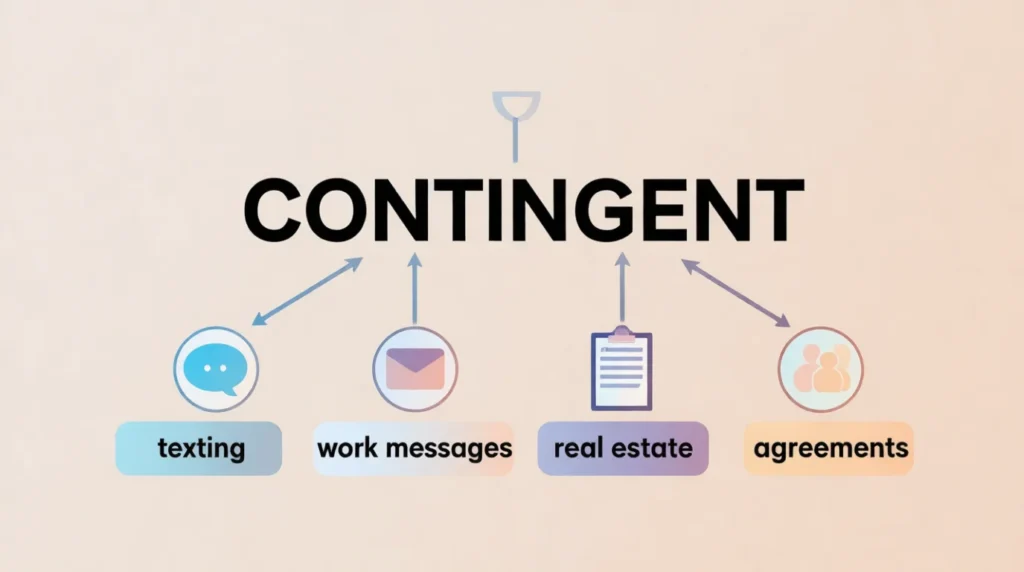
- Real estate listings 🏡
“Offer accepted — contingent.” - Job applications & HR emails 💼
“Your offer is contingent upon background checks.” - Texting & group chats 💬
“Plans are contingent on the weather lol.” - Business conversations 📊
“Payment is contingent upon delivery.” - School or university updates 🎓
“Approval is contingent on final grades.”
Tone:
✔ Formal
✔ Semi-casual
✔ Not slang
✔ Not flirty
✔ Used when discussing conditions, requirements, or pending decisions
💬 Examples of Contingent in Conversation
Here are real, natural chat-style examples:
1
A: u coming this weekend?
B: maybe, it’s contingent on whether I get my assignment done 😩
2
A: did you get the job??
B: kinda… the offer is contingent on references lol
3
A: we still doing dinner?
B: contingent on traffic… if it’s wild I’m staying home 😂
4
A: house sold??
B: offer accepted but contingent on inspection 😭
5
A: can u play tonight?
B: contingent on my mood tbh 💀
6
A: when’s the payment dropping?
B: contingent on approval from finance
7
A: so r u joining the trip??
B: contingent on my parents saying yes 😭😂
🕓 When to Use and When Not to Use Contingent
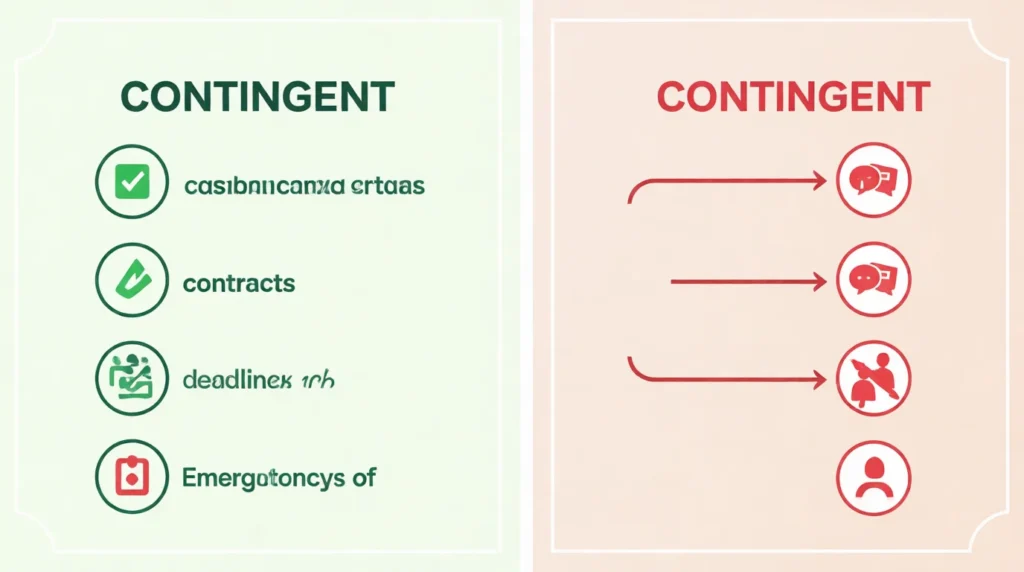
✅ When to Use
Use “contingent” when:
- You want to say something depends on a condition
- You need a formal or semi-formal tone
- Talking about plans that aren’t confirmed
- Discussing rules, approvals, contracts, or requirements
- Sharing updates that may change later
❌ When Not to Use
Avoid “contingent” when:
- You’re texting casually with friends (use “depends” instead)
- The situation is emotional, urgent, or serious
- You want simple and clear wording
- You’re speaking informally or joking around
- The person may not understand big vocabulary
📊 Comparison Table
| Context | Example Phrase | Why It Works |
|---|---|---|
| Friend Chat | “Plans are contingent on the weather 😄” | Casual but still clear |
| Work Chat | “Approval is contingent on review.” | Professional & concise |
| “Your enrollment is contingent upon documents.” | Formal and precise | |
| Business | “Payment is contingent on delivery.” | Legal and contract-friendly |
| School | “Final grade is contingent on exam score.” | Academic & accurate |
🔄 Similar Slang Words or Alternatives
Below is a quick table of words that carry a similar meaning or vibe:
| Word | Meaning | When to Use |
|---|---|---|
| Depends | Something will happen only if conditions match | Everyday texting, casual chats |
| Pending | Waiting for approval or decision | Work, emails, school updates |
| Conditional | Requires a specific outcome | Formal discussions & contracts |
| Subject to | Will happen only under certain terms | Business, legal, real estate |
| Provisional | Temporary, not confirmed | Academic, job, or official messages |
| Tentative | Not final yet | Plans, events, schedules |
❓ FAQs About Contingent
1. Does “contingent” mean confirmed?
No. It means not confirmed yet because something still needs to happen.
2. Is “contingent” slang?
No — it’s a real English word used formally and semi-formally.
3. Can you use “contingent” in casual texting?
Yes, but it sounds slightly formal. “Depends” is more natural.
4. What does “contingent offer” mean?
It means the offer is accepted but only valid if certain conditions are met.
5. What does it mean when a house is “contingent”?
It’s under contract, but the sale isn’t final yet — the buyer must clear inspections, financing, etc.
6. Can “contingent” be used in relationships?
Rarely, but technically yes:
“My decision is contingent on how honest they are.”
7. What’s the easiest synonym?
“Depends.”
Conclusion
The word “contingent” might sound formal or complicated at first, but it’s actually simple once you break it down.
It just means that something depends on another condition before it becomes real, final, or confirmed.
Whether you see it in texts, emails, real estate listings, or work updates, the meaning stays the same: it’s not official yet — something must happen first.
Understanding this word helps you read messages more clearly, sound more confident in work conversations, and express conditions in a smart, accurate way.
Now that you know it, you’ll be able to use it exactly when it fits — and avoid the confusion many people still have.

Naz Fatima is an author at Saypadia who specializes in writing clear, relatable, and reader-friendly content about language, expressions, and modern terminology. She enjoys breaking down meanings with real-life context so readers can quickly understand and apply them. Naz’s work reflects a strong commitment to clarity, accuracy, and helping users find quick answers without confusion.

