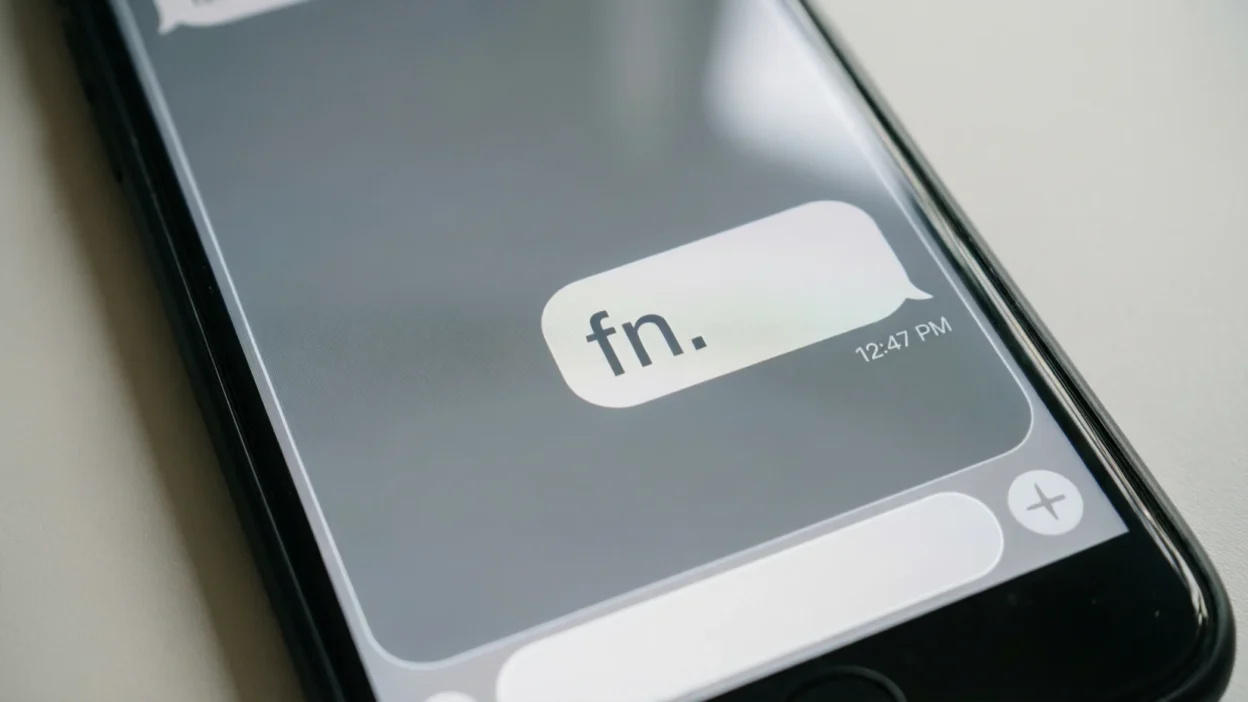
You’re scrolling through messages or comments and suddenly see “fn” dropped into a sentence with no explanation. Maybe it’s in a group chat, a tweet, or a gaming message. At first glance, it looks confusing because fn doesn’t always mean the same thing. Depending on the context, it can change completely. That’s why people often search this term after seeing it online for the first time. Don’t worry once you understand the common meanings, it becomes easy to spot what someone is really saying.
Quick Answer
FN usually means “for now” or “f*ing” in text**, depending on the context of the conversation.
What Does FN Mean in Text?
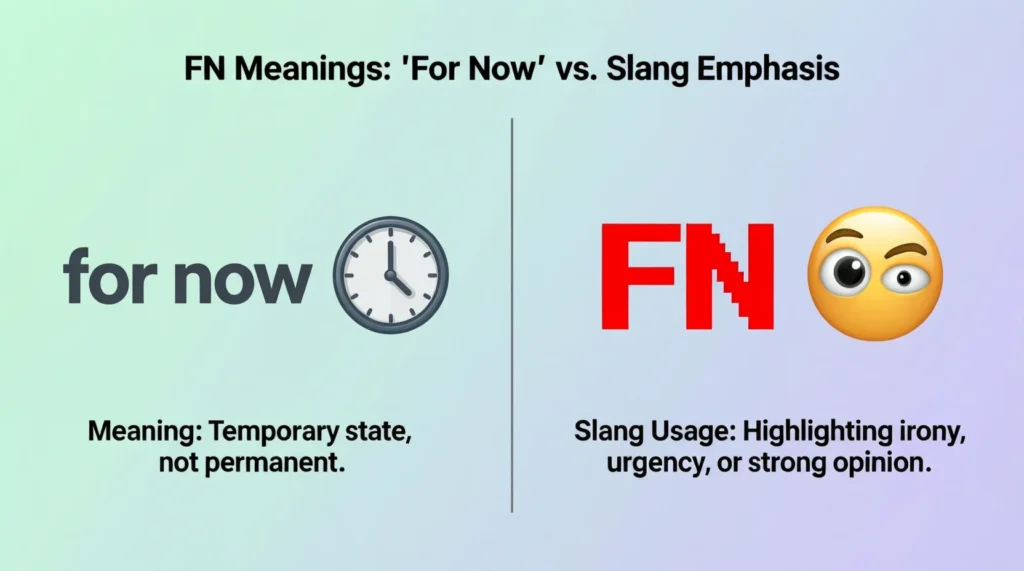
FN is a short texting abbreviation, and unlike some slang terms, it has more than one meaning. The two most common uses are:
1. FN = For Now
This is the clean and neutral meaning.
It’s used when something is temporary and may change later.
Example:
“let’s leave it like this fn.”
2. FN = F***ing
This is the slang and explicit meaning.
It’s used to add emphasis, emotion, or frustration. This version is very informal and can be offensive depending on who you’re talking to.
Example:
“that fn game glitch ruined everything.”
Bold summary: FN can mean “for now” or be slang for emphasis, and the meaning depends entirely on context.
Why Do People Use FN?
People use FN because:
- it’s fast to type
- it saves space
- it fits casual texting culture
- it adds emphasis without spelling everything out
In informal chats, people often shorten words to keep conversations flowing quickly.
Where Is FN Commonly Used?
FN is most common in casual and informal spaces.
You’ll see it in:
- text messages
- group chats
- gaming chats
- social media comments
- discord servers
- online forums
The tone depends on the meaning:
- “for now” → neutral
- slang emphasis → casual or aggressive
It is not appropriate for professional communication.
Realistic Conversation Examples
Here are real-life style examples that show both meanings clearly:
- “i’m busy fn, text you later”
- “we’re cool fn but let’s talk soon”
- “that fn update broke everything”
- “he fn forgot again”
- “i’ll stay home fn”
- “this fn lag is insane”
- “leave it fn and fix it later”
Context makes the meaning clear every time.
When to Use and When Not to Use FN
Use FN When:
- texting friends or people you know well
- talking casually
- using “for now” in short messages
- adding emphasis in informal chats
Don’t Use FN When:
- writing work emails
- messaging teachers or clients
- talking to someone sensitive to language
- clarity matters more than speed
Quick Comparison Table
| Context | Example Phrase | Why It Works or Doesn’t |
|---|---|---|
| casual text | “i’m offline fn” | clear and casual |
| gaming chat | “this fn lag” | common slang |
| work email | “issue is fn unresolved” | unclear and informal |
| mixed audience | “he’s fn late” | could offend |
Similar Slang and Alternatives
Here are some alternatives depending on the meaning you want:
For “For Now”
- rn – right now
- atm – at the moment
- temporarily – clearer, more formal
For Emphasis
- really – safer emphasis
- super – casual but clean
- very – neutral
- so – conversational
Choosing the right alternative avoids confusion.
Common Misunderstandings About FN
Some people think:
- FN has only one meaning (it doesn’t)
- FN is always offensive (not true)
- FN works everywhere (it doesn’t)
The meaning of FN always depends on context and tone.
Frequently Asked Questions
Does FN always mean something bad?
No. It often just means “for now.”
Is FN slang?
Yes. It’s informal texting slang.
Can FN be offensive?
Yes, when used as slang emphasis.
Is FN okay for social media?
Yes, in casual posts and comments.
Should I use FN in professional messages?
No. It’s best avoided.
How do I know which meaning is used?
Look at the sentence. Context makes it clear.
Final Thought
FN is one of those short texting terms that changes meaning based on how it’s used. Most of the time, it simply means “for now.” Other times, it’s slang used for emphasis. As long as you pay attention to context and audience, FN is easy to understand and use in modern texting culture.

Naz Fatima is an author at Saypadia who specializes in writing clear, relatable, and reader-friendly content about language, expressions, and modern terminology. She enjoys breaking down meanings with real-life context so readers can quickly understand and apply them. Naz’s work reflects a strong commitment to clarity, accuracy, and helping users find quick answers without confusion.