The first time many people hear the word ovulation, it’s usually in a health class, a doctor’s office, or during a late-night scroll through social media. Someone mentions fertility, periods, or pregnancy, and suddenly this word shows up. It sounds medical and complicated, so most people nod along without fully understanding it. If you’ve ever wondered what ovulation actually means, when it happens, or why everyone talks about it so much, you’re not alone. The truth is, ovulation is a normal and important part of the menstrual cycle, and once it’s explained simply, it makes a lot more sense.
Let’s break it down in plain, easy words.
Quick Answer:
Ovulation means the ovary releases an egg, making pregnancy possible for a short time each month.
What Does Ovulation Mean?
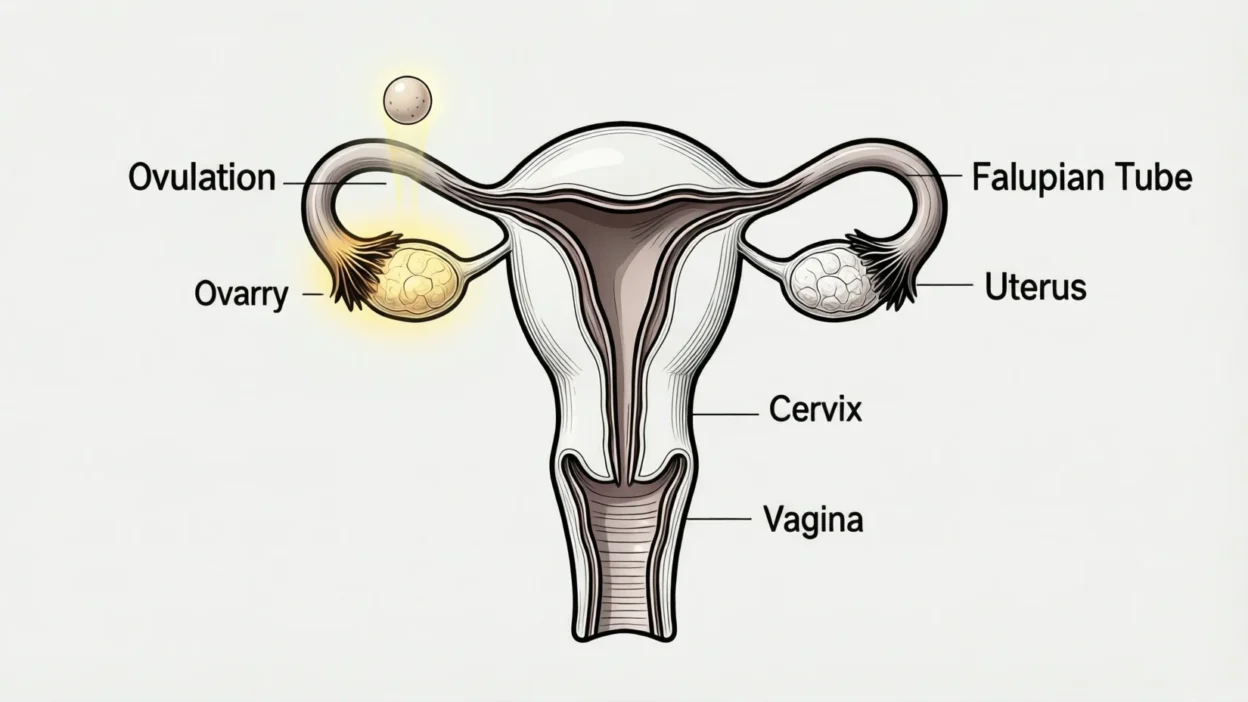
Ovulation is a natural process in the female reproductive system. It happens when one of the ovaries releases a mature egg.
Once the egg is released, it travels through the fallopian tube toward the uterus. If sperm meets the egg during this time, pregnancy can happen. If not, the egg breaks down and leaves the body during the next period.
Plain-English Meaning
Ovulation is the moment when the body releases an egg that could become a baby if fertilized.
Why Ovulation Matters
- It controls fertility
- It helps determine the best time to get pregnant
- It affects hormones and mood
- It’s part of a healthy menstrual cycle
Simple Example
“she tracks ovulation to know her most fertile days.”
Bold takeaway: Ovulation is when an egg is released from the ovary, creating a short window where pregnancy can happen.
How Ovulation Works in the Body
Ovulation is part of the menstrual cycle, which usually lasts about 28 days, though this can vary.
Here’s how it works in simple steps:
- The brain sends hormone signals to the ovaries
- An egg matures inside one ovary
- The ovary releases the egg (this is ovulation)
- The egg travels through the fallopian tube
- The uterus prepares for possible pregnancy
If sperm fertilizes the egg, pregnancy begins. If not, the uterus sheds its lining, which becomes a period.
When Does Ovulation Happen?
Ovulation usually happens about halfway through the menstrual cycle.
- In a 28-day cycle, ovulation often occurs around day 14
- In longer or shorter cycles, the timing changes
Fertile Window
The egg only lives for about 12 to 24 hours, but sperm can live inside the body for up to 5 days. This creates a fertile window of about 5–6 days.
That’s why people trying to conceive often track ovulation closely.
Signs and Symptoms of Ovulation
Not everyone notices ovulation, but many people experience signs.
Common Ovulation Signs
- Mild lower belly pain on one side
- Clear, stretchy discharge (often compared to egg whites)
- Increased sex drive
- Slight increase in body temperature
- Breast tenderness
- Heightened sense of smell
These signs are normal and vary from person to person.
Where Is the Term Ovulation Commonly Used?
The word ovulation appears in many everyday and medical conversations.
Common Places You’ll Hear It
- Doctor or gynecologist visits
- Pregnancy and fertility apps
- Health articles and blogs
- Period-tracking apps
- Conversations about pregnancy planning
Tone of the Word
- Neutral
- Medical
- Educational
It’s not slang and not casual texting language, but it’s widely used online in health discussions.
Real-Life Conversation Examples
Here are realistic examples showing how people naturally talk about ovulation:
- “my app says i’m ovulating this week”
- “ovulation usually happens mid-cycle”
- “i get cramps every time i ovulate”
- “tracking ovulation helped us conceive”
- “stress can delay ovulation sometimes”
- “i didn’t know ovulation could cause pain”
- “ovulation affects hormones a lot”
These examples show ovulation used in everyday health talk.
When to Use and When Not to Use the Term
✅ Use Ovulation When:
- Talking about fertility or pregnancy
- Discussing menstrual health
- Asking medical or health questions
- Tracking periods or cycles
❌ Don’t Use Ovulation When:
- Making jokes in serious settings
- Replacing casual words like “period” incorrectly
- Using it as slang
- Assuming everyone understands it without explanation
Quick Comparison Table
| Context | Example Phrase | Why It Works / Doesn’t |
|---|---|---|
| health discussion | “ovulation occurs mid-cycle” | clear and correct |
| doctor visit | “i track ovulation” | appropriate |
| casual joke | “i’m ovulating lol” | ❌ can feel awkward |
| education | “ovulation releases an egg” | accurate |
Ovulation vs Period (Common Confusion)
Many people mix these up, but they’re not the same.
- Ovulation: Egg is released
- Period: Uterine lining sheds
Ovulation happens before the period. If ovulation doesn’t occur, periods may become irregular.
Can You Get Pregnant Without Ovulation?
No. Ovulation is required for pregnancy.
If no egg is released, there is nothing for sperm to fertilize. This is why some medical conditions that stop ovulation can make pregnancy difficult.
FAQ: Common Questions About Ovulation
Is ovulation painful?
For most people, it’s painless. Some feel mild cramps, called ovulation pain.
Can ovulation happen every month?
Usually yes, but stress, illness, or hormones can delay or stop it sometimes.
Can you ovulate without having a period?
It’s rare, but possible in certain medical situations.
How long does ovulation last?
The egg lives for 12–24 hours, but the fertile window lasts several days.
Can you feel ovulation happening?
Some people notice signs, others don’t. Both are normal.
Does ovulation affect mood?
Yes. Hormonal changes can impact mood and energy levels.
Is ovulation the best time to get pregnant?
Yes. This is when fertility is highest.
Final Thought
Ovulation might sound like a complicated medical term, but it’s simply a natural part of the body’s monthly cycle. It’s the moment when an egg is released, creating a short window where pregnancy is possible.
Understanding ovulation helps people make informed choices about health, fertility, and family planning. Once you know what it means, it becomes much easier to understand your body and how it works.

Hadi Bhatti is a passionate writer and content creator at Saypadia, known for turning complex words, phrases, and internet slang into simple, easy-to-understand explanations. With a strong interest in language, meanings, and digital communication, Hadi focuses on helping readers understand what words really mean in everyday use. His writing style is clear, engaging, and user-focused, making learning both practical and enjoyable.