You’re scrolling through messages or reading comments when someone says, “too much pda.” You pause. Are they talking about a device? A message feature? Or something else entirely? This is one of those terms that looks technical but actually comes from everyday life—and it’s very common online.
Quick Answer:
PDA means “Public Display of Affection.” It’s a casual term used to talk about showing love or affection in front of other people, both offline and online.
Let’s explain it in a simple, clear way.
What Does PDA Mean in Text?
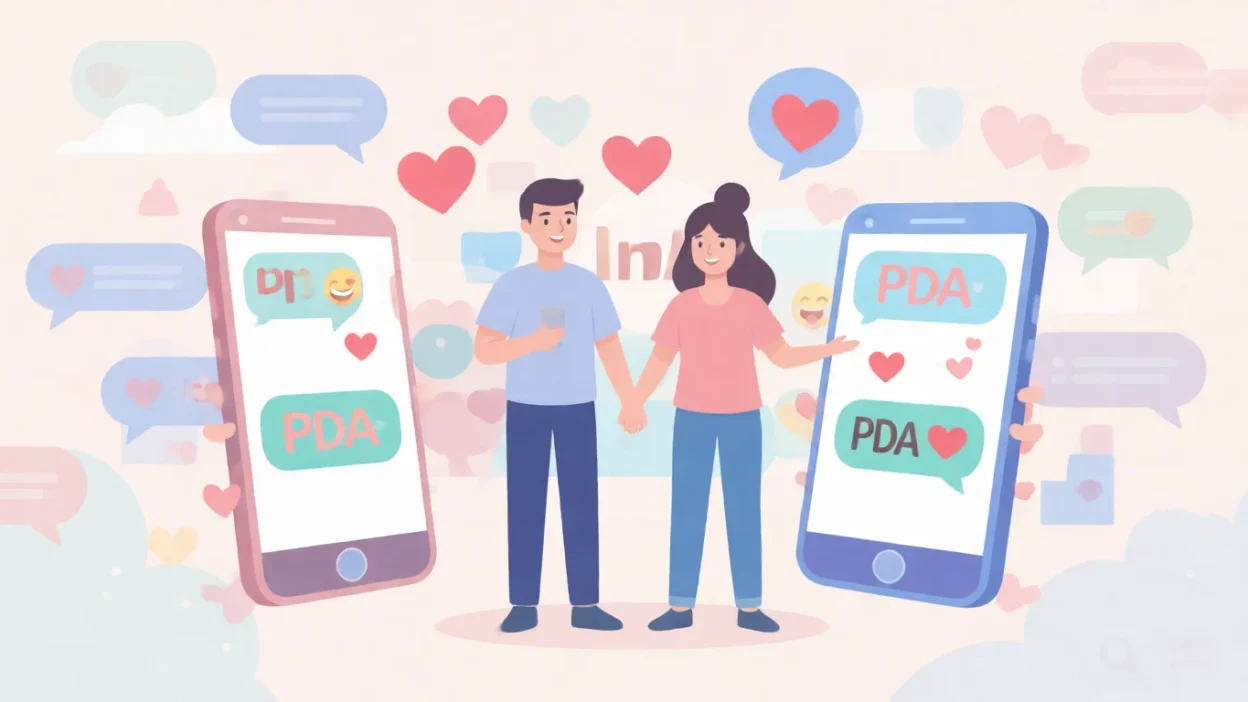
PDA is a texting abbreviation that describes affectionate behavior done where others can see it. In digital conversations, it often refers to:
- Couples being very loving in public
- Overly romantic posts or comments
- Excessive flirting in group chats
Simplified meaning
- Showing love publicly
- Being affectionate in front of others
- Sometimes used jokingly or critically
Short example
“okay that’s enough pda 😭”
In short:
pda = public display of affection = showing love where others can see.
Where Is PDA Commonly Used?
You’ll see this term across many social and online spaces 👇
- 💬 Text messages – friends teasing
- 📱 Instagram & Snapchat – couple posts
- 🎵 TikTok comments – reactions to couples
- 🧑🤝🧑 Group chats – joking complaints
- 👫 Relationship talk – boundaries
Tone check
- ✅ Casual
- ✅ Social-media friendly
- ⚠️ Can be teasing or judgmental
- ❌ Not professional
It’s part of everyday text language, not formal writing.
Examples of PDA in Conversation
Here are natural, real-life style examples in casual lowercase tone.
- “y’all doing too much pda”
- “no pda in the group chat pls”
- “their comments are full of pda”
- “that post was pure pda”
- “some people love pda, some don’t”
- “public pda makes me cringe”
The meaning depends on tone—sometimes playful, sometimes critical.
When to Use and When Not to Use PDA
Context matters a lot with this term.
✅ When to Use It
- Talking with friends
- Commenting on couple posts
- Light teasing or jokes
- Relationship discussions
❌ When Not to Use It
- Work or school messages
- Professional writing
- Sensitive conversations
- Formal settings
Context comparison table
| Context | Example Phrase | Why It Works |
|---|---|---|
| Friend chat | “too much pda lol” | playful |
| Social media | “the pda is wild” | casual |
| Group chat | “no pda pls” | joking |
| Work email | ❌ “avoid pda” | awkward |
| Serious talk | ❌ joking use | wrong tone |
Similar Slang Words or Alternatives
If you want different ways to say the same idea, try these.
| Term | Meaning | When to Use |
|---|---|---|
| affection | showing love | neutral |
| couple behavior | romantic actions | descriptive |
| lovey-dovey | very romantic | playful |
| flirting | playful interest | casual |
| romance | love behavior | general |
Each option fits a slightly different mood.
FAQs About PDA
1. What does pda stand for?
It stands for public display of affection.
2. Is it always negative?
No. It can be neutral, playful, or critical.
3. Does it only mean physical affection?
Mostly, but it can also mean romantic posts or comments.
4. Is it common in texting?
Yes, especially in social media slang.
5. Can it be used jokingly?
Very often, especially among friends.
6. Should I use it at work?
No. It’s too informal.
7. Does everyone like PDA?
No—comfort levels vary from person to person.
Final Thoughts
Now you know what pda means and why it pops up so often in texts and comments.
It’s a simple way to talk about public affection, whether offline or online. Sometimes it’s funny, sometimes awkward, and sometimes just honest.

Naz Fatima is an author at Saypadia who specializes in writing clear, relatable, and reader-friendly content about language, expressions, and modern terminology. She enjoys breaking down meanings with real-life context so readers can quickly understand and apply them. Naz’s work reflects a strong commitment to clarity, accuracy, and helping users find quick answers without confusion.