Have you ever finished reading a message, thought it was over, and then noticed a little “PS” at the bottom? The first time I saw it in an email, I wondered if I had missed something important. Was it a code? A secret message?
Turns out, it’s something simple that people have used for hundreds of years. Even today, PS still shows up in texts, captions, and online posts.
Let’s break it down clearly and simply.
Quick Answer
PS stands for “Post Script.”
It’s added at the end of a letter, email, or message to include an extra thought after the main message is finished.
What Does PS Mean?
PS is short for Post Script, which comes from Latin: post scriptum, meaning “written after.”
People use PS when they want to:
- Add extra information
- Include something they forgot
- Highlight an important reminder
- Add a friendly closing thought
Simple Explanation
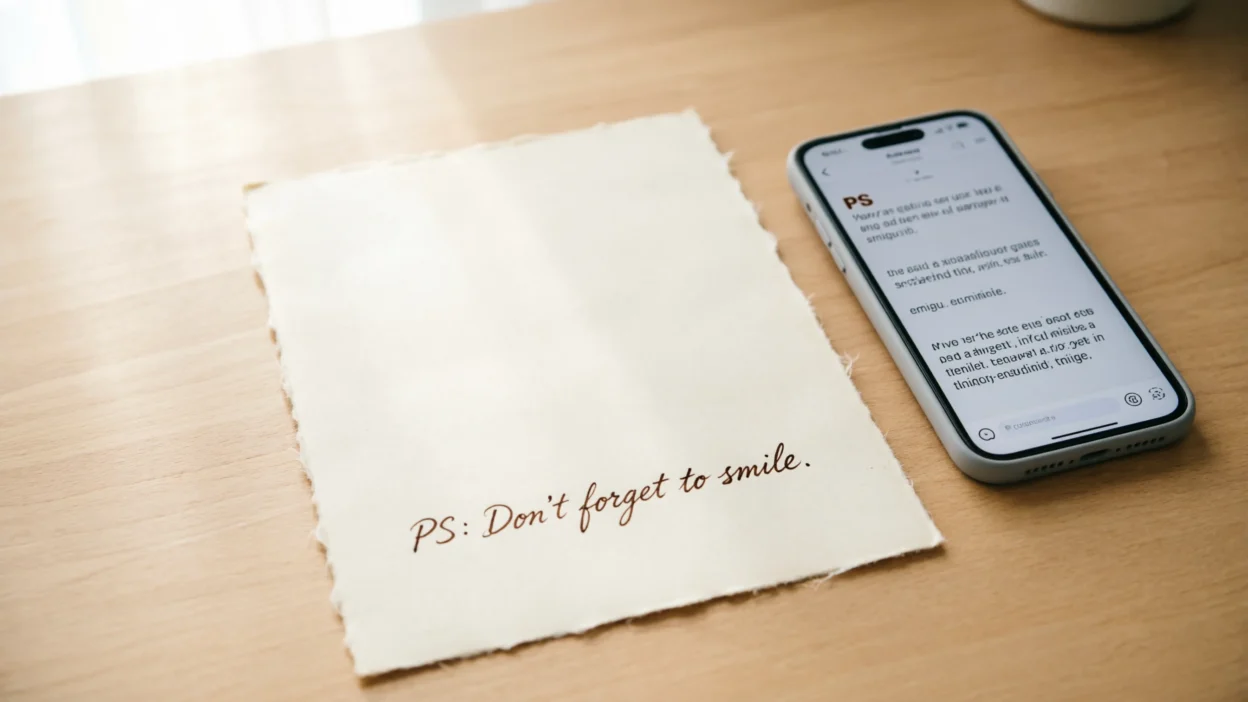
Imagine you send a message and then suddenly remember something else you wanted to say. Instead of rewriting everything, you just add:
PS: Don’t forget to bring snacks!
That’s it. It’s like a bonus sentence at the end.
In simple terms: PS means “here’s one more thing after I finished writing.”
Where Is PS Commonly Used?
Even though PS started in handwritten letters, it’s still popular today.
1. Emails
Very common in both casual and business emails. It can highlight an important point.
Example:
PS: The deadline is Friday.
2. Text Messages
Less common than in emails, but still used for extra notes.
Example:
ps: call me later.
3. Social Media Posts
People use PS in captions to add humor or an extra thought.
Example:
ps: yes, i ate the whole cake.
4. Marketing and Ads
Marketers love PS because readers often notice it quickly.
Tone-wise, PS is usually:
- Neutral
- Friendly
- Sometimes playful
- Occasionally formal in professional emails
Real-Life Conversation Examples (Lowercase Style)
- “can’t wait for tomorrow!”
“ps: don’t forget your ticket.” - “thanks for helping me today.”
“ps: you’re the best.” - “meeting starts at 10.”
“ps: join 5 mins early.” - “i finished the project.”
“ps: check the last slide.” - “happy birthday!!”
“ps: your gift is on the way.” - “i’ll see you soon.”
“ps: bring coffee.” - “great game today.”
“ps: rematch tomorrow?”
When to Use PS (And When Not To)
✅ Use PS When:
- You forgot to add something
- You want to highlight a key point
- You’re writing emails
- You want to add a friendly final touch
- You’re writing a letter or caption
❌ Avoid PS When:
- The message is extremely short
- You’re writing formal academic papers
- It makes your message confusing
- You keep adding too many extra notes
Quick Comparison Table
| Context | Example | Works? | Why |
|---|---|---|---|
| Email to coworker | PS: Please review page 2. | ✅ | Professional and clear |
| Birthday message | PS: love you! | ✅ | Friendly and warm |
| Short text | “ok.” + PS: hi | ❌ | Unnecessary |
| Formal report | PS: extra info | ❌ | Not academic style |
Similar Terms You Might See
| Term | Meaning | When Used |
|---|---|---|
| P.P.S. | Post Post Script | Adding a second extra note |
| FYI | For Your Information | Sharing useful info |
| BTW | By The Way | Casual extra thought |
| NB | Nota Bene (note well) | Formal writing |
If you see P.P.S., it simply means you added another thought after the first PS.
Example:
PS: Don’t forget the meeting.
P.P.S.: Bring your laptop.
Frequently Asked Questions
1. Is PS formal or informal?
It can be both. It works in emails, letters, and casual messages. It’s not used in formal academic essays.
2. What does P.S. with dots mean?
It’s the same as PS. Some people write it with periods (P.S.) and some don’t. Both are correct.
3. Why do people still use PS today?
Because it grabs attention. Readers often notice the PS line quickly.
4. Can you use PS in texting?
Yes, especially for reminders or extra notes. It’s less common but still understood.
5. What’s the difference between PS and BTW?
PS comes at the end of a full message. BTW can appear anywhere in a sentence.
Final Thought
Now you know that PS stands for Post Script, meaning “written after.” It’s simply an extra thought added at the end of a message.
From old handwritten letters to modern emails and social media posts, PS has stayed popular for centuries. It’s short, clear, and useful when you remember something at the last minute.
Next time you see PS at the bottom of a message, you’ll know it’s just one more important thing the writer didn’t want you to miss.

Hadi Bhatti is a passionate writer and content creator at Saypadia, known for turning complex words, phrases, and internet slang into simple, easy-to-understand explanations. With a strong interest in language, meanings, and digital communication, Hadi focuses on helping readers understand what words really mean in everyday use. His writing style is clear, engaging, and user-focused, making learning both practical and enjoyable.