You’re reading a group chat and someone replies with “smh”—no explanation, no emojis, just those three letters. At first, it can feel confusing. Are they mad? Disappointed?
Joking? Most people first notice SMH on social media, in comments, or during a heated chat where words feel unnecessary. It’s short, expressive, and very online. Once you know what it means, you’ll instantly recognize the feeling behind it every time.
Quick Answer
SMH means “shaking my head,” used to show disappointment, disbelief, or mild frustration.
What Does SMH Mean in Text and Slang?
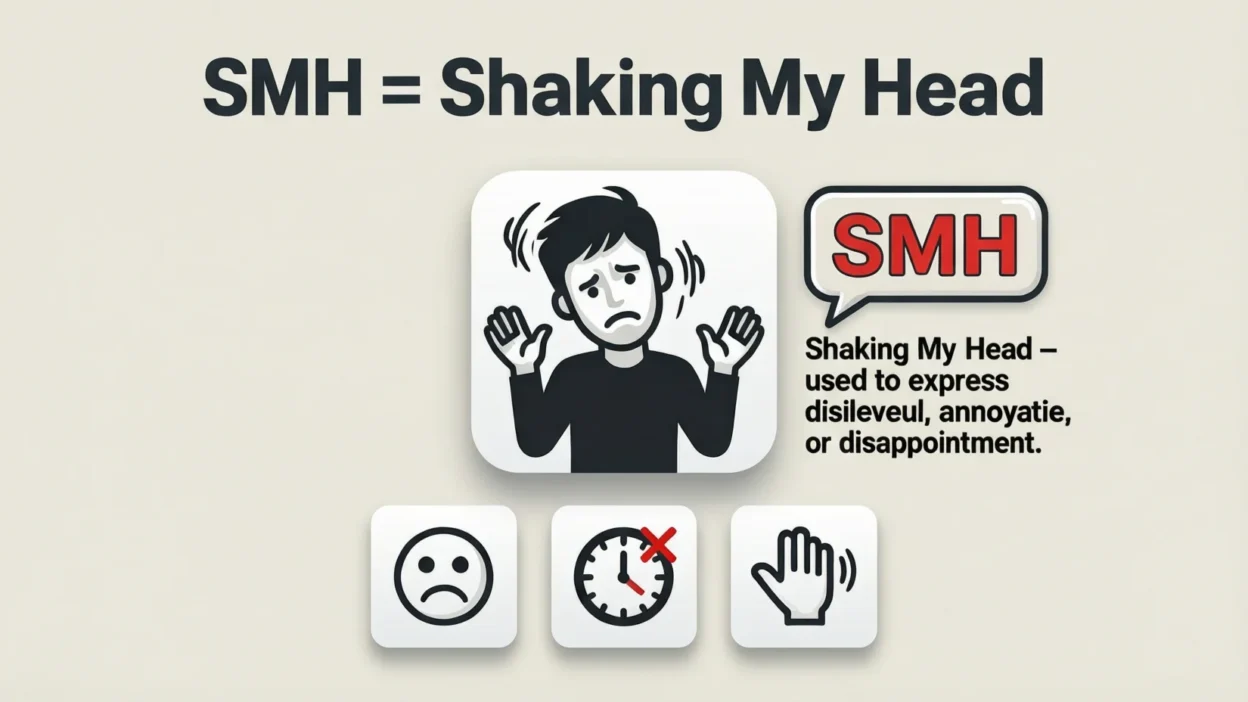
In texting and online slang, SMH stands for shaking my head. It’s used when something is so silly, disappointing, or unbelievable that words don’t feel necessary.
It’s not usually aggressive. Think of it as a digital sigh with a head shake.
Plain-English meaning:
SMH = “I can’t believe this” or “that’s disappointing”
Example sentence:
“he forgot his keys again smh”
Bold summary:
SMH means shaking my head to express disappointment, disbelief, or frustration.
Why Do People Use SMH?
People use SMH because:
- it’s short and fast
- it shows emotion without explaining
- it fits casual online talk
- it adds tone to a message
Instead of typing a full reaction, SMH says everything in three letters.
It’s especially useful when:
- something goes wrong (again)
- someone makes a bad decision
- a situation feels avoidable
Where Is SMH Commonly Used?
SMH is very common in casual and informal settings.
You’ll see it in:
- texting and group chats
- TikTok comments
- Twitter (X) posts
- Instagram replies
- gaming chats and forums
Tone:
Casual, informal, slightly negative
Not formal or professional
SMH works best when talking to friends or reacting online.
Realistic Conversation Examples (Modern Texting Style)
(all lowercase, natural chat style)
- “he showed up late again smh”
- “they canceled the event last minute smh”
- “you didn’t save your work? smh”
- “smh i knew this would happen”
- “forgot my charger at home smh”
- “that update broke everything smh”
- “smh why are people like this”
- “he really said that smh”
These examples show how SMH adds emotion without extra explanation.
When to Use and When NOT to Use SMH
✅ Do Use SMH When:
- reacting to something disappointing
- joking about small mistakes
- chatting casually with friends
- commenting on social media
❌ Don’t Use SMH When:
- writing professionally
- talking to someone you don’t know well
- discussing serious or sensitive topics
- clarity matters more than tone
Context Comparison Table
| Context | Example Phrase | Why It Works / Doesn’t |
|---|---|---|
| group chat | “he forgot again smh” | casual and clear |
| social media | “prices went up smh” | fits tone |
| work email | “deadline missed smh” | unprofessional |
| serious apology | “smh sorry” | seems dismissive |
SMH vs Similar Slang
Here’s how SMH compares to other common reactions:
| Slang | Meaning | Tone |
|---|---|---|
| smh | shaking my head | disappointed |
| fr | for real | agreement |
| lol | laughing | light |
| sigh | frustration | mild |
| yikes | awkward or bad | surprised |
| bruh | disbelief | informal |
SMH focuses on disapproval or disbelief, not humor.
Common Misunderstandings About SMH
Some people think SMH means anger. Most of the time, it doesn’t.
It usually shows:
- mild frustration
- disappointment
- disbelief
Tone depends on context. Adding emojis can soften it:
- “smh 😂” → joking
- “smh…” → more serious
FAQs About SMH
What does SMH mean in texting?
It means “shaking my head.”
Is SMH rude?
Not usually. It’s casual but can sound negative.
Is SMH Gen Z slang?
It’s used by Gen Z and millennials alike.
Can SMH be sarcastic?
Yes. Context makes that clear.
Should I use SMH at work?
No. It’s too informal.
Is SMH still used in 2026?
Yes. It’s still very common online.
Final Thought
SMH is one of those short slang terms that carries a lot of feeling. It captures disappointment, disbelief, or mild frustration without needing a long explanation.
As long as you keep it casual and use it in the right context, SMH fits perfectly into modern texting and social media culture.

Robat Hood is a creative writer and contributor at Saypadia, focused on explaining trending words, slang, and cultural phrases in a simple and engaging way. With a sharp eye for modern language trends, Robat aims to make Saypadia a trusted place for understanding how words are used online and in daily conversations. His content is informative, approachable, and designed for readers of all levels.