When people first learn about government, they usually hear that power is divided into three branches. However, the judicial branch is often the least understood. You might know it has something to do with courts, yet you may wonder what it actually does day to day. Does it make laws? Does it enforce them? Or does it do something else entirely? Understanding the judicial branch is important because it directly affects rights, freedoms, and how laws are applied in real life.
Let’s break it down clearly and simply.
Quick Answer:
The judicial branch interprets laws, decides if they are constitutional, and resolves legal disputes through the court system.
What Does the Judicial Branch Do?
The judicial branch is one of the three branches of the United States government. Its main job is to interpret laws and make sure they follow the Constitution.
It does not create laws.
It does not enforce laws.
Instead, it explains what laws mean and decides whether they are fair under the Constitution.
Plain-English Meaning
The judicial branch makes sure laws are applied correctly and do not violate people’s rights.
Bold takeaway: The judicial branch checks laws and settles legal disagreements using the courts.
The Three Branches of Government
To understand the judicial branch, it helps to see how it fits into the bigger system.
1. United States Congress
- Makes laws
- Part of the legislative branch
2. Executive Branch
- Enforces laws
- Led by the President
3. Judicial Branch
- Interprets laws
- Includes federal courts
This system creates checks and balances, meaning no branch has too much power.
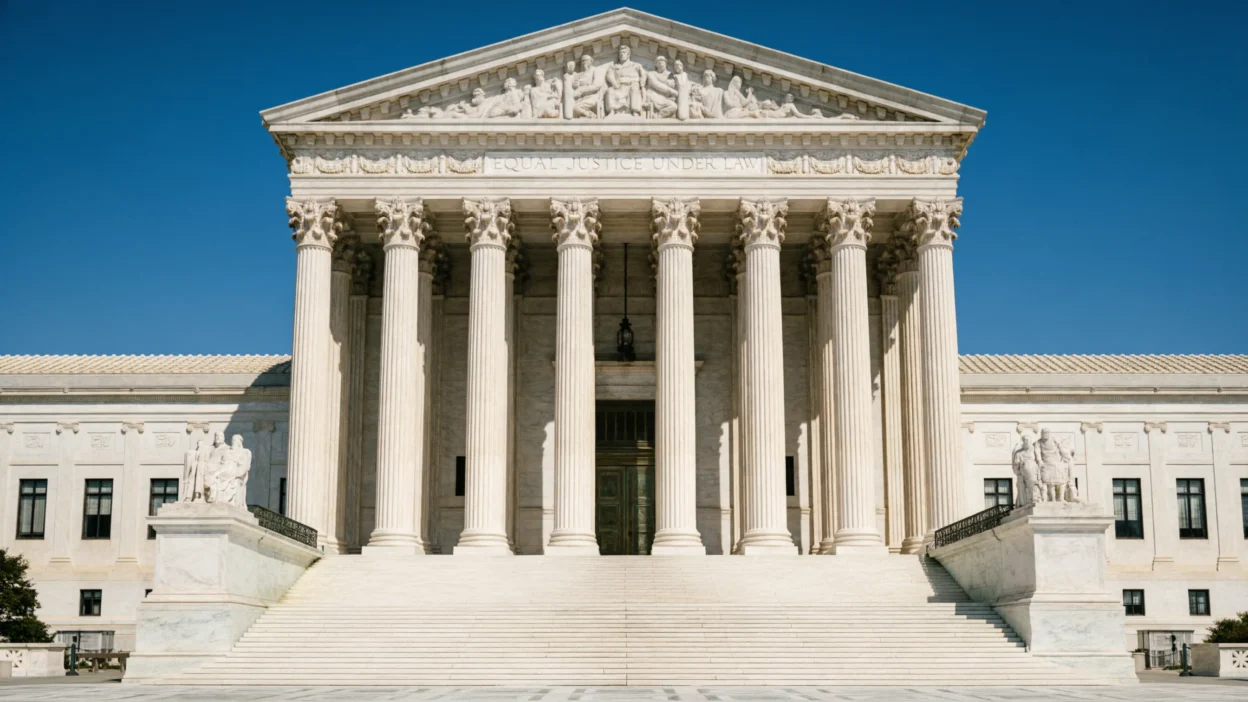
The Highest Court: Supreme Court of the United States
At the top of the judicial branch is the Supreme Court.
What the Supreme Court Does
- Reviews important legal cases
- Decides if laws follow the Constitution
- Makes final decisions on major national issues
Once the Supreme Court makes a decision, it becomes the final interpretation of the law.
Key Responsibilities of the Judicial Branch
Here are the main jobs of the judicial branch explained simply.
1. Interpreting Laws
Courts explain what laws mean in real situations.
2. Judicial Review
The power to declare a law unconstitutional.
3. Resolving Disputes
Courts settle disagreements between:
- Individuals
- States
- Businesses
- The government
4. Protecting Rights
The judicial branch protects constitutional rights such as:
- Freedom of speech
- Freedom of religion
- Equal protection under the law
What Is Judicial Review?
Judicial review is one of the most powerful tools of the judicial branch.
It allows courts to:
- Strike down laws
- Limit government actions
- Protect constitutional rights
If a law conflicts with the Constitution, the court can declare it invalid.
Types of Courts in the Judicial Branch
The judicial system has multiple levels.
Federal Court System Structure
- District Courts (trial courts)
- Courts of Appeals
- Supreme Court
Each level handles different types of cases and appeals.
Real-Life Examples of What the Judicial Branch Does
Here’s how the judicial branch works in everyday life:
- Deciding if a new law violates free speech
- Reviewing criminal cases
- Settling disputes between states
- Determining if government actions are constitutional
- Protecting civil rights
Without the judicial branch, laws could be unfairly applied without oversight.
When the Judicial Branch Steps In
The judicial branch becomes involved when:
- Someone challenges a law
- A legal dispute needs resolution
- A constitutional question arises
- An appeal is filed
It does not act unless a case is brought before it.
Quick Comparison Table
| Branch | Main Role | Example |
|---|---|---|
| Legislative | Makes laws | Passes a new tax law |
| Executive | Enforces laws | Police enforce the law |
| Judicial | Interprets laws | Court reviews the law |
Why the Judicial Branch Is Important
The judicial branch keeps the balance of power stable.
It:
- Prevents abuse of authority
- Protects minority rights
- Ensures fairness
- Maintains constitutional limits
Without it, there would be no neutral system to challenge unfair laws.
FAQ: Common Questions About the Judicial Branch
Does the judicial branch make laws?
No. That is the job of Congress.
Can the judicial branch remove a president?
It can rule on legal cases involving a president but does not directly remove one.
What is the highest court?
The Supreme Court of the United States.
What does unconstitutional mean?
It means a law goes against the Constitution.
How many Supreme Court justices are there?
There are nine justices.
Can Supreme Court decisions be changed?
They can be overturned by later Supreme Court decisions or constitutional amendments.
Final Thought
The judicial branch plays a critical role in protecting democracy. While it does not create or enforce laws, it ensures those laws follow the Constitution and are applied fairly. Through courts and judicial review, it acts as a safeguard against government overreach.

Robat Hood is a creative writer and contributor at Saypadia, focused on explaining trending words, slang, and cultural phrases in a simple and engaging way. With a sharp eye for modern language trends, Robat aims to make Saypadia a trusted place for understanding how words are used online and in daily conversations. His content is informative, approachable, and designed for readers of all levels.