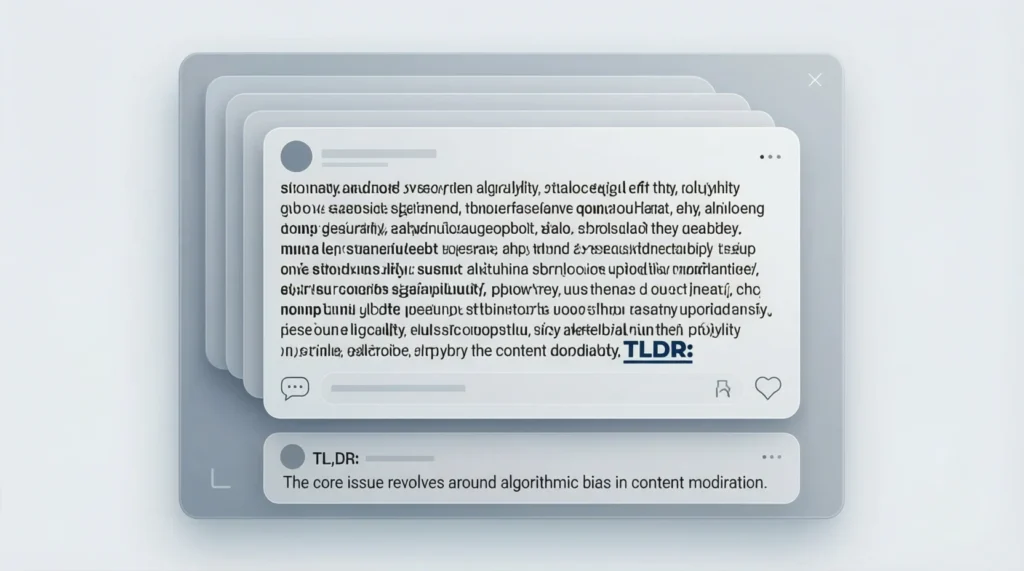
You open a long Reddit post or a massive Twitter thread and think, there’s no way I’m reading all of this. Then you scroll down and see “TLDR:” followed by one short line. Instant relief.
If you’ve ever skipped straight to that part or seen someone reply with just “tldr?”, you’ve already interacted with this slang without fully thinking about it. So what does TLDR actually mean, and why is it everywhere online? Let’s explain it in the simplest, most relatable way.
Quick Answer:
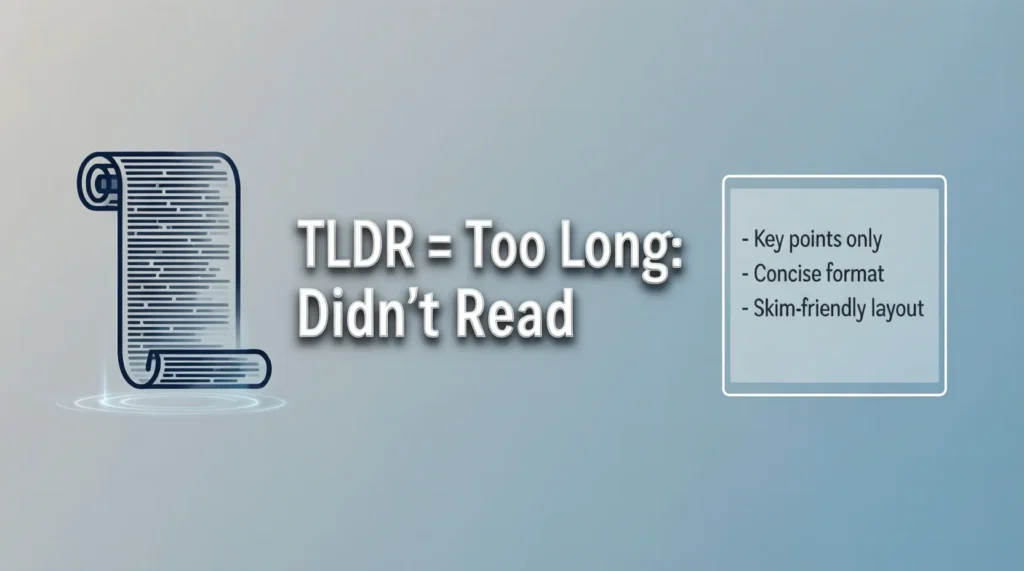
TLDR means “Too Long; Didn’t Read.” It’s used to summarize long content or to say something was too long to read.
What Does TLDR Mean in Text and Online Chats?
TLDR is a very common piece of internet slang. It’s an abbreviation, not a formal word, and it comes from online forums and early internet culture.
Plain-English Meaning
TLDR is used when:
- A post or message is very long
- Someone wants a short summary
- The writer provides a quick version at the end
It can be used in a helpful way or a slightly sarcastic way, depending on tone.
Example Sentence:
“tldr: the update got delayed again.”
Bold Summary: TLDR means “too long; didn’t read” and points to a short summary of long content.
Why People Use TLDR So Much Online
Modern internet users scroll fast. Attention spans are short. TLDR fits perfectly into today’s digital habits.
Main Reasons People Use TLDR
- To save time
- To highlight key points
- To help readers who skim
- To make long posts more readable
Creators often add a TLDR at the end to be considerate.
Tone: Casual and informal
TLDR is friendly in most contexts but can sound rude if misused.
Where Is TLDR Commonly Used?
You’ll see TLDR across almost every major platform.
Common Platforms
- Twitter (X)
- Discord
- Tumblr
- YouTube comments
- Blogs and forums
It’s especially popular in text-heavy spaces.
Realistic Conversation Examples Using “TLDR”
Here’s how TLDR appears in real, modern conversations online:
- “tldr: he messed up and apologized”
- “this post is wild, tldr please”
- “tldr at the bottom if you’re busy”
- “no offense but tldr?”
- “tldr version would help”
- “i added a tldr for everyone”
- “tldr: nothing really changed”
- “read the tldr, the rest is details”
When to Use and When Not to Use TLDR
✅ When You Should Use TLDR
- Summarizing a long post
- Helping readers skim content
- Writing blogs, threads, or guides
- Casual online discussions
❌ When You Should Not Use TLDR
- In formal emails or documents
- When speaking professionally
- If it may sound dismissive
- In serious or emotional conversations
Context Comparison Table
| Context | Example Phrase | Why It Works or Doesn’t |
|---|---|---|
| reddit post | “tldr at the end” | helpful and expected |
| group chat | “tldr pls” | casual and normal |
| work email | “tldr: do this” | too informal |
| serious story | “tldr lol” | can feel rude |
TLDR vs Summary: What’s the Difference?
People often confuse TLDR with a normal summary.
Key Differences
- TLDR is informal and internet-based
- Summary is neutral and formal
- TLDR is often one sentence
- Summaries can be longer and structured
Both serve the same purpose but fit different tones.
Similar Slang and Alternatives to TLDR
Here are common alternatives and when to use them.
| Term | Meaning | When to Use |
|---|---|---|
| summary | short explanation | formal writing |
| recap | brief review | casual or media |
| gist | main idea | informal |
| bottom line | key point | conversations |
| in short | quick explanation | neutral tone |
TLDR is the most internet-native option.
FAQs About “What Does TLDR Mean?”
1. Is TLDR rude?
Not usually, but it can sound rude if used carelessly.
2. Can TLDR be used positively?
Yes. Many writers include it to help readers.
3. Does TLDR mean someone didn’t read?
Sometimes, or it can simply introduce a summary.
4. Is TLDR still popular in 2026?
Yes. It’s still widely used across platforms.
5. Can I use TLDR in school or work?
It’s better to use “summary” in formal settings.
6. Is TLDR lowercase or uppercase?
Both are common. “tldr” is very popular in chats.
Final Thought
So, what does TLDR mean in 2026? It’s a fast, casual way to deal with long content in a scroll-heavy world.
Whether you’re asking for a summary or offering one yourself, TLDR helps people get the point without reading everything. Just remember: it works best in informal spaces where everyone understands internet culture.

Naz Fatima is an author at Saypadia who specializes in writing clear, relatable, and reader-friendly content about language, expressions, and modern terminology. She enjoys breaking down meanings with real-life context so readers can quickly understand and apply them. Naz’s work reflects a strong commitment to clarity, accuracy, and helping users find quick answers without confusion.