
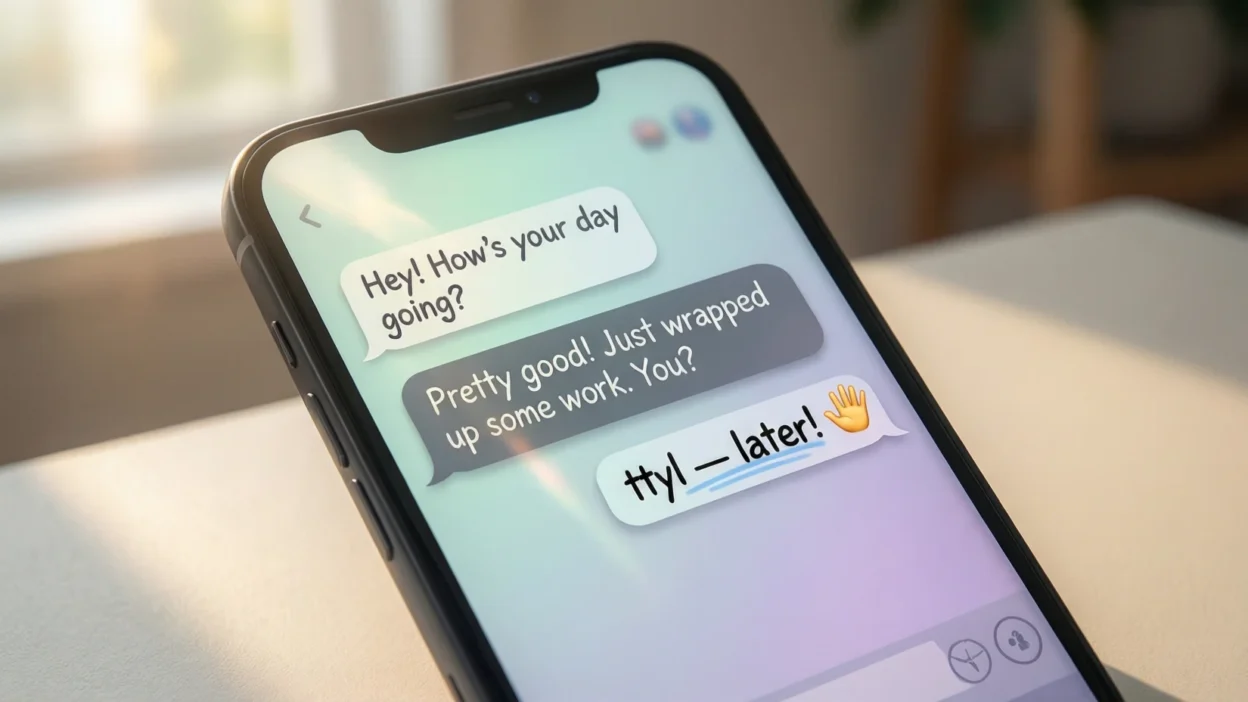
You’re chatting with a friend, everything feels normal, and then suddenly they reply with “ttyl” and disappear. No explanation. No goodbye. Just those four letters. If you’ve ever paused and wondered whether it was rude, friendly, or something else entirely, you’re not alone.
TTYL has been around since the early days of texting, but it’s still everywhere today from WhatsApp and Instagram DMs to gaming chats and comment sections. Once you understand what it means and how it’s used, it becomes one of the easiest texting shortcuts to read and use.
Quick Answer
TTYL means “Talk To You Later,” and it’s a casual way to say goodbye in texts or online chats.
What Does TTYL Mean in Text?
TTYL is a texting abbreviation that stands for “Talk To You Later.” People use it to politely end a conversation while leaving the door open to talk again soon.
In plain English, it means:
“I’m leaving now, but we’ll chat again later.”
It’s friendly, relaxed, and not meant to sound final or serious.
People use TTYL because:
- it’s short and fast to type
- it sounds friendly, not cold
- it avoids long goodbyes
- it fits casual online conversations
Example sentence:
“i gotta run, ttyl!”
Bold summary: TTYL is a casual goodbye that means you’ll talk again later.
Where Is TTYL Commonly Used?
TTYL is used almost exclusively in informal communication. You’ll see it in places where people type quickly and casually.
Common places include:
- texting and group chats
- instagram, snapchat, and facebook messages
- gaming chats
- online forums
- discord servers
The tone of TTYL is casual and friendly. It’s not formal, professional, or serious. You wouldn’t use it in emails to your boss or official messages.
Realistic Conversation Examples
Here’s how TTYL looks in real, everyday chats:
- “my battery’s dying, ttyl”
- “i’m heading out now ttyl”
- “class is starting ttyl”
- “can’t talk rn, ttyl”
- “let’s finish this later ttyl”
- “mom’s calling ttyl”
- “gotta get back to work ttyl”
All of these feel natural and relaxed, just like real texting.
When to Use and When Not to Use TTYL
Use TTYL When:
- ending a casual conversation
- chatting with friends or family
- you plan to talk again later
- the mood is relaxed and friendly
Don’t Use TTYL When:
- writing professional emails
- talking to clients or teachers
- ending serious or emotional conversations
- you don’t actually plan to talk again
Quick Comparison Table
| Context | Example Phrase | Why It Works or Doesn’t |
|---|---|---|
| texting a friend | “gotta go ttyl” | friendly and casual |
| family chat | “heading out ttyl” | natural tone |
| work email | “meeting’s over ttyl” | too informal |
| serious talk | “we need space ttyl” | sounds dismissive |

Similar Slang and Alternatives
Here are some common alternatives to TTYL and how they’re used:
- BRB – be right back, very short absence
- GTG – got to go, immediate exit
- Talk soon – friendly but more clear
- Catch you later – casual and conversational
- Bye for now – polite and soft goodbye
- See ya – informal and friendly
Each option fits slightly different texting situations, but all are casual.
Common Misunderstandings About TTYL
Some people think:
- it’s rude (it’s usually not)
- it means the person is annoyed (it doesn’t)
- it’s outdated (it’s still widely used)
TTYL is neutral-to-positive. The meaning depends more on context and tone than the word itself.
Frequently Asked Questions
Is TTYL rude?
No. It’s a friendly way to end a conversation.
Is TTYL outdated?
Not really. It’s still common in texting and online chats.
Can adults use TTYL?
Yes. People of all ages use it.
Is TTYL formal?
No. It’s very informal.
Can TTYL mean goodbye forever?
No. It usually implies you’ll talk again later.
Is TTYL used worldwide?
Yes. English speakers around the world recognize it.
Final Thought
TTYL is one of the simplest and friendliest pieces of texting slang. It helps conversations end naturally without feeling awkward or final.
If someone sends you TTYL, they’re not brushing you off they’re just saying goodbye for now. And if you want a relaxed way to sign off in a chat, TTYL fits perfectly.

Naz Fatima is an author at Saypadia who specializes in writing clear, relatable, and reader-friendly content about language, expressions, and modern terminology. She enjoys breaking down meanings with real-life context so readers can quickly understand and apply them. Naz’s work reflects a strong commitment to clarity, accuracy, and helping users find quick answers without confusion.