Have you ever seen someone caption a TikTok or Instagram post with the word “poignant” and paused, wondering what it really meant? I did — and honestly, I had to Google it.
In everyday texting and social media, poignant pops up more than you’d think, from reactions to emotional memes to heartfelt tweets.
If you’ve ever wondered, “What does poignant mean in text?” you’re in the right place.
Let’s break it down, with simple explanations, real chat examples, and tips for using it confidently online.
Quick Answer:
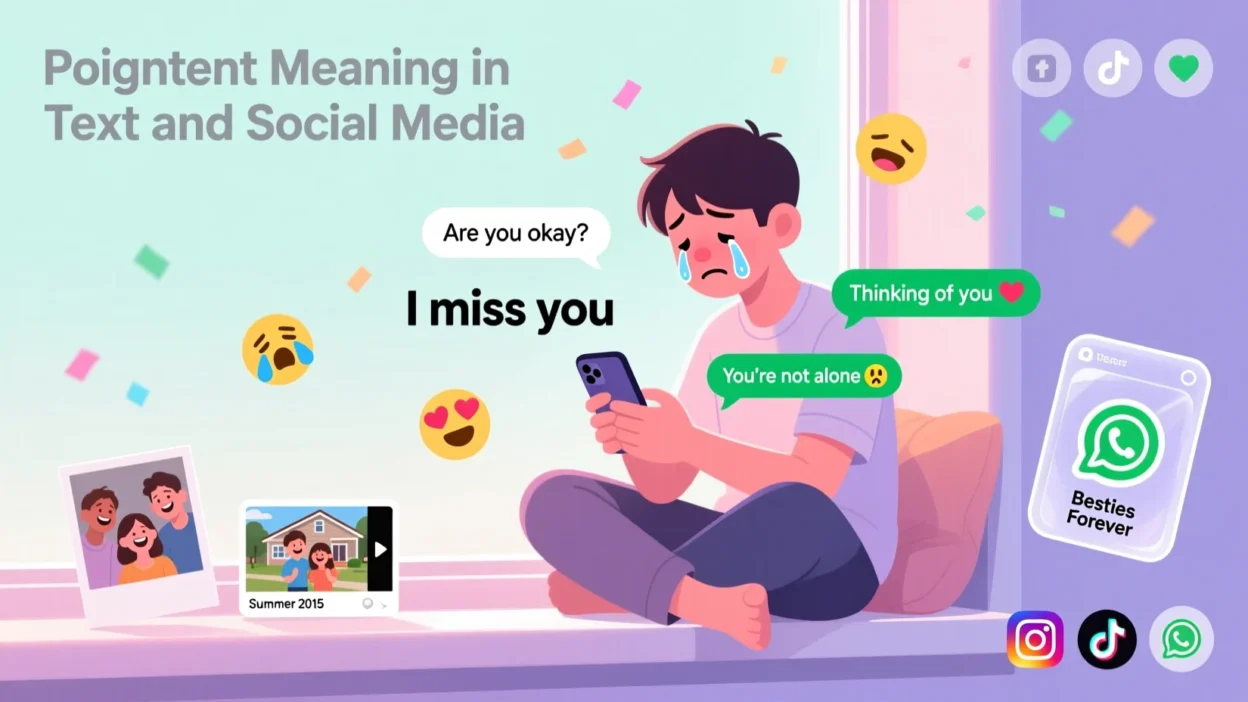
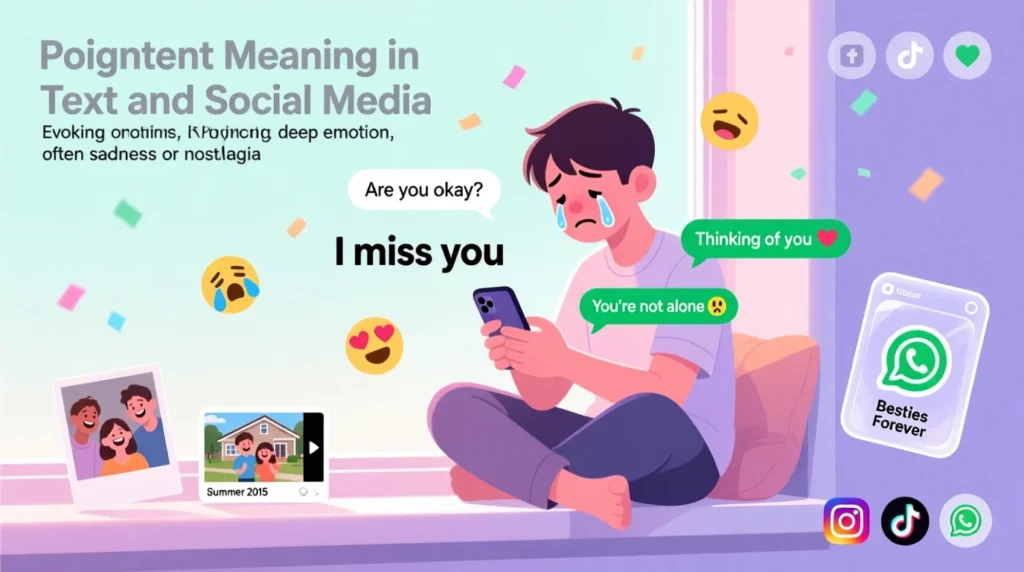
Poignant means “evoking deep emotion, often sadness or nostalgia.” It’s a casual, thoughtful way of saying something is emotionally touching or moving.
🧠 What Does Poignant Mean in Text?
In text, poignant isn’t just fancy vocabulary — it’s a way to react to something emotionally powerful or moving.
Examples of usage:
- Reacting to a touching story: “that story was so poignant 😢”
- Responding to a heartfelt message: “wow, that’s poignant, thank you for sharing 🙏”
In short:
Poignant = Evoking emotion = Emotionally touching or moving
📱 Where Is Poignant Commonly Used?
You’ll spot poignant across social media and texting platforms:

- Instagram captions 🌸 – “The sunset view was so poignant…”
- TikTok reactions 🎵 – Replying to emotional videos with “so poignant 😭”
- WhatsApp & iMessage 💬 – Sending a heartfelt message to a friend
- Twitter threads 🐦 – Commenting on nostalgic or emotional posts
Tone:
- Casual & friendly online
- Thoughtful in text messages
- Never really flirty or formal
💬 Examples of Poignant in Conversation
Here are realistic chat examples using poignant meaning in texting:

Example 1:
A: just finished that movie 😭
B: yeah, so poignant
Example 2:
A: saw my old childhood photos today
B: omg, that’s so poignant 😢
Example 3:
A: reading her letter…
B: poignant and heartfelt ❤️
Example 4:
A: this TikTok hit me hard
B: totally poignant, made me tear up
Example 5:
A: that song always brings back memories
B: poignant vibes 😭
🕓 When to Use and When Not to Use Poignant

✅ When to Use Poignant
- Reacting to emotional content or memories
- Responding thoughtfully to heartfelt messages
- Describing art, music, or posts that evoke feelings
❌ When Not to Use Poignant
- Casual jokes or memes
- Formal professional emails
- Situations needing light, upbeat language
Comparison Table:
| Context | Example Phrase | Why It Works |
|---|---|---|
| Friend Chat | that story was so poignant 😢 | Casual & emotionally aware |
| Work Chat | the presentation was poignant | Polite, thoughtful |
| your feedback was poignant | Formal & clear | |
| Social Media | this TikTok is poignant 😭 | Fun & relatable |
🔄 Similar Slang Words or Alternatives
| Slang/Word | Meaning | When to Use |
|---|---|---|
| Touching | Emotionally moving | Casual texts & social posts |
| Heartfelt | Deeply sincere or emotional | Messages, captions |
| Emotional 😢 | Evoking feelings | Social media & chat |
| Nostalgic 🌸 | Reminds of the past emotionally | Memories, stories |
| Moving | Strongly affects emotions | Posts, texts, speeches |
❓ FAQs About Poignant
- What does poignant mean exactly?
Evoking strong emotions, often sadness, nostalgia, or heartfelt feeling. - Can I use poignant in texting?
Yes! Perfect for social media, texting friends, or reacting to emotional content. - Is poignant formal or casual?
Both. Online it’s casual; in writing or messages, it can be formal and thoughtful. - Does poignant have an emoji meaning?
Yes — 😢😭❤️ often accompany poignant to show emotion visually. - Can I use poignant in captions?
Absolutely! Instagram, TikTok, or Twitter posts benefit from “poignant” to express emotion.
⭐ Final Thoughts
The poignant meaning in text goes beyond a dictionary definition. Whether you’re reacting to a touching TikTok, sharing nostalgic memories, or commenting on heartfelt posts, using poignant adds emotional depth and relatability to your messages.
Now you can confidently drop it in chats, captions, or threads to show you truly feel the moment. 😢❤️

Robat Hood is a creative writer and contributor at Saypadia, focused on explaining trending words, slang, and cultural phrases in a simple and engaging way. With a sharp eye for modern language trends, Robat aims to make Saypadia a trusted place for understanding how words are used online and in daily conversations. His content is informative, approachable, and designed for readers of all levels.