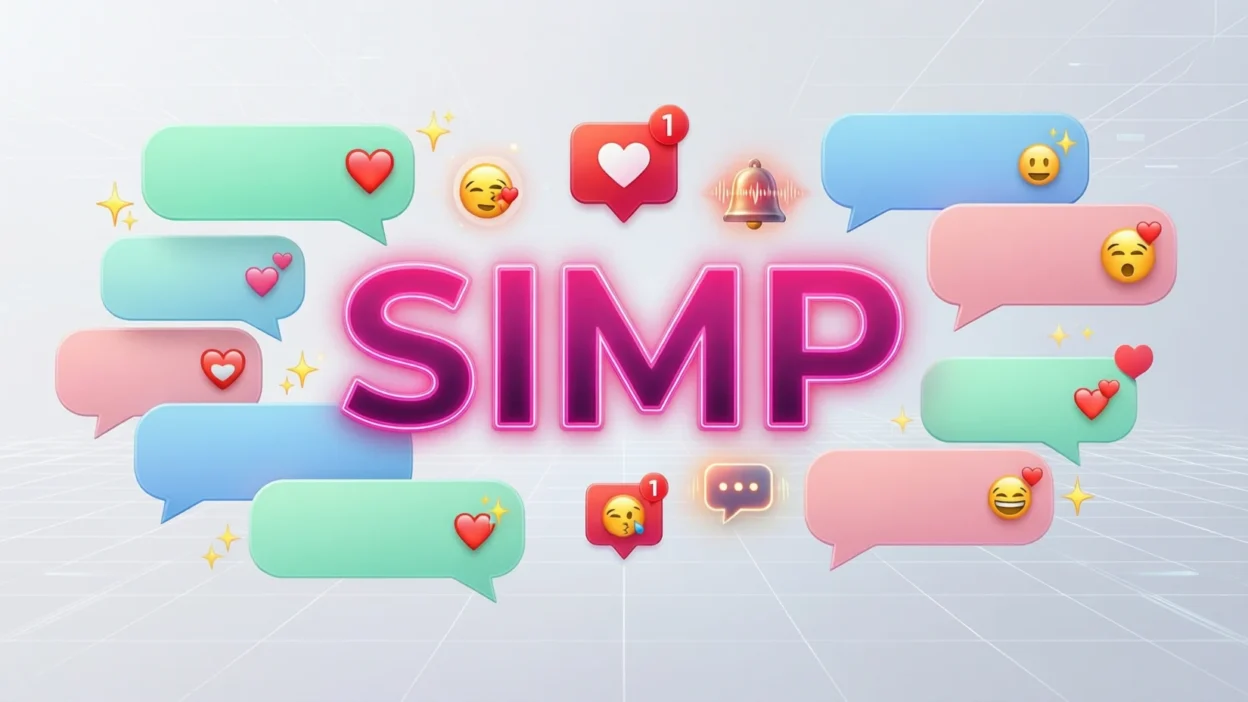
The word simp is modern slang, mostly used online. It describes a person who tries too hard to impress someone, usually a romantic interest, even when that attention isn’t returned.
Plain-English Meaning
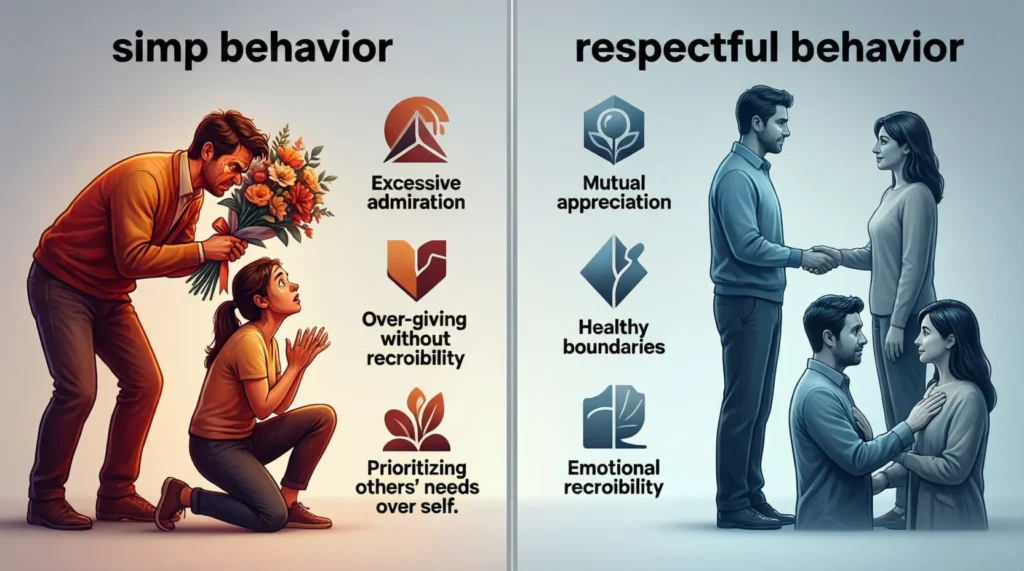
A simp is someone who:
- Over-praises someone
- Prioritizes another person over their own self-respect
- Does favors expecting love or validation
- Ignores red flags just to stay liked
Example Sentence:
“he keeps buying her gifts even though she ignores him—people call that simping.”
Bold Summary: A simp puts someone else on a pedestal, often at their own expense.
Where Did the Word Simp Come From?
The term simp existed long before social media, but it became popular again around 2019–2020 through TikTok, Twitter, and Twitch culture.
Origin Breakdown
- Originally short for “simpleton”
- Used in hip-hop lyrics in the early 2000s
- Went viral online as meme slang
- Now commonly used in comments and jokes
Over time, the meaning shifted from “foolish person” to someone who over-invests emotionally without balance.
Is Being a Simp Always a Bad Thing?
Not necessarily. This is where people get confused.
When It’s NOT Simping
- Being kind
- Showing respect
- Supporting your partner
- Complimenting someone genuinely
When It IS Simping
- Constant praise with no boundaries
- Ignoring disrespect
- Doing everything for someone who gives nothing back
- Losing self-respect to gain attention
Key Difference:
Kindness with self-respect is not simping. Desperation without boundaries is.
What Does Simp Mean on Social Media?
On platforms like TikTok, Instagram, Twitch, and YouTube, simp is often used jokingly.
Common Online Uses
- A fan donating money to a streamer repeatedly
- Someone defending a celebrity no matter what
- Excessive flirting in comments
- Over-the-top compliments
Sometimes it’s playful. Other times it’s meant as an insult.
Example:
“he donated again—ultimate simp behavior.”
Simp vs Respect: What’s the Difference?
This comparison clears up most confusion.
| Behavior | Simp | Respect |
|---|---|---|
| compliments | excessive | genuine |
| boundaries | none | clear |
| expectations | hidden | honest |
| self-worth | ignored | maintained |
| motivation | approval | connection |
Being respectful doesn’t mean you’re a simp. Losing yourself to please someone does.
How Simp Is Used in Everyday Conversation
Here are realistic ways people use the word:
- “bro stopped everything for her—total simp”
- “being nice doesn’t make you a simp”
- “that comment section is full of simps”
- “he’s simping hard in her DMs”
- “people call anything simping now”
- “simp culture is everywhere online”
- “you can care without being a simp”
The tone can be joking, teasing, or critical depending on context.

Why the Word Simp Is So Popular in 2026
The word stuck around because it reflects modern online behavior.
Reasons It’s Still Trending
- Dating happens online
- Parasocial relationships are common
- Influencer culture rewards attention
- Memes spread slang fast
People use “simp” to call out imbalanced attention and effort in digital relationships.
Can Girls Be Simps Too?
Yes. While the term is often aimed at men, anyone can be a simp.
Female Simping Examples
- Defending someone who treats them badly
- Over-investing emotionally without reciprocity
- Ignoring self-worth for attention
The behavior matters more than gender.
FAQs About the Meaning of Simp
1. Does simp mean weak?
No. It means lacking boundaries, not strength.
2. Is simping the same as loving someone?
No. Love includes mutual respect and balance.
3. Can simping be a joke?
Yes. It’s often used humorously online.
4. Is simp always negative?
Usually, but context matters.
5. Is the word simp offensive?
It can be, depending on how it’s used.
6. Is simping common online?
Yes, especially with influencers and streamers.
7. Will the word simp still be used in the future?
Yes. It has become part of internet culture.
Final Thought
So, what does simp mean in 2026? It describes someone who gives excessive attention or devotion to another person while neglecting their own self-respect. Being kind, caring, or supportive does not make you a simp.
The line is crossed when effort becomes one sided and boundaries disappear. Understanding this difference helps you avoid misuse of the term and keeps online conversations more honest.

Robat Hood is a creative writer and contributor at Saypadia, focused on explaining trending words, slang, and cultural phrases in a simple and engaging way. With a sharp eye for modern language trends, Robat aims to make Saypadia a trusted place for understanding how words are used online and in daily conversations. His content is informative, approachable, and designed for readers of all levels.